
Targeted Metabolic Therapy (TMT) reframes cancer as a complex, systems-level metabolic disease rather than a purely cell-autonomous genetic disorder. Proposed as an integrative therapeutic framework, TMT applies simultaneous, low-toxicity pressure across three interconnected domains of cancer progression to prevent adaptive resistance and therapeutic escape.
1. The Three Interlocking Domains of TMT
Rather than targeting a single oncogenic mutation in isolation, TMT exerts coordinated pressure across three physiological layers:
Tumor-Intrinsic Metabolic and Signaling Hubs: Blocks universal bioenergetic and survival engines within cancer cells, including glycolysis (the Warburg effect), glutaminolysis, the IGF-1/PI3K-AKT-mTOR signaling axis, Wnt/β-catenin signaling, angiogenesis, apoptosis resistance, and immune evasion.
The Tumor Microenvironment (TME): Disrupts extracellular niches that protect malignant cells and drive recurrence, specifically targeting cancer stem cell (CSC) compartments, metastatic cascades, extracellular acidity/lactate accumulation, intratumoral hypoxia, and persistent local inflammation.
Systemic Host Metabolism: Corrects systemic host dysfunctions that create a permissive growth environment for tumors, addressing hyperglycemia, insulin resistance, chronic systemic inflammation, hematologic imbalances, micronutrient deficits, circadian disruption, and cancer cachexia.
2. Core Targeted Pathways
TMT focuses on universal metabolic bottlenecks that sustain tumor expansion and survival:
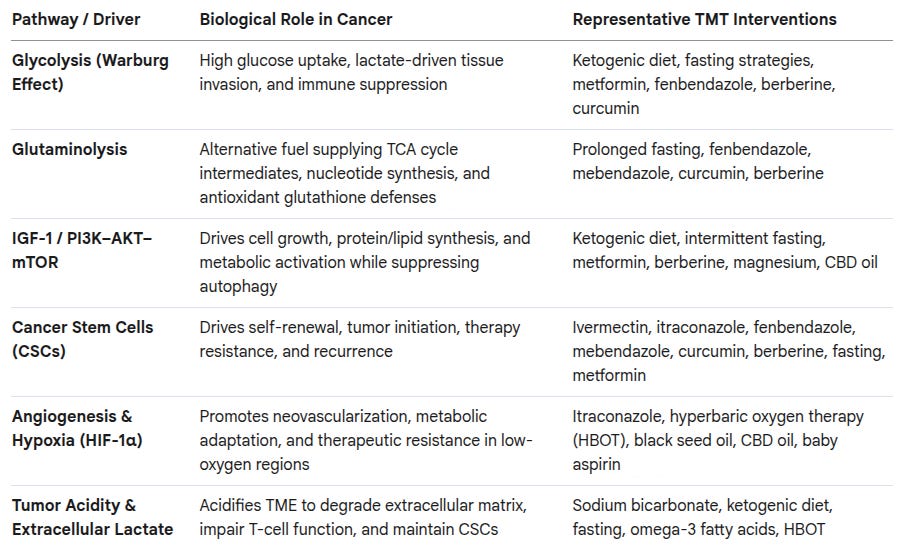
3. Integrated Intervention Categories
TMT operationalizes this systems-level framework by combining multiple non-overlapping intervention pillars:
Dietary and Fasting Strategies: Uses ketogenic diets, intermittent fasting, and prolonged fasting (or fasting-mimicking diets) to lower circulating glucose, insulin, and IGF-1 levels while inducing differential stress resistance between healthy tissues and cancer cells.
Repurposed Pharmacological Agents: Incorporates well-characterized drugs with known metabolic and signaling activities, including fenbendazole/mebendazole (microtubule blockade, glycolysis suppression, anti-angiogenesis), ivermectin (Wnt/β-catenin and YAP/Hippo blockade), metformin (AMPK activation, mTOR suppression), itraconazole (Hedgehog and VEGFR inhibition), low-dose naltrexone (LDN) (OGF-OGFr axis activation, TLR4/NF-κB modulation), and baby aspirin (COX-1/2 inhibition, prevention of platelet cloaking).
Multi-Target Nutraceuticals: Employs bioactives such as curcumin, berberine, thymoquinone (black seed oil), omega-3 fatty acids (EPA/DHA), modified citrus pectin (galectin-3 inhibitor), medicinal mushrooms (β-glucans), and lactoferrin to dampen inflammatory signaling, generate selective oxidative stress, and restrict iron availability.
Vitamins and Minerals: Restores foundational micronutrient levels—including Vitamin D, zinc, selenium, and magnesium—to support p53 function, DNA repair, mitochondrial stability, and anti-tumor immunity.
Adjunct Redox and Microenvironment Modulators: Incorporates sodium bicarbonate (buffering extracellular tumor acidity), hyperbaric oxygen therapy (HBOT; counteracting tumor hypoxia and downregulating HIF-1α), and cannabidiol (CBD oil; inducing mitochondrial apoptosis and suppressing AKT/mTOR).
Lifestyle Optimization: Integrates structured exercise, sleep regulation, and stress management to reduce cortisol, improve insulin sensitivity, and mitigate cancer cachexia.
4. Clinical Rationale and Overcoming Adaptive Escape
A major limitation of single-target therapies is the remarkable plasticity of cancer cells: blocking one signaling or metabolic node rapidly causes the tumor to engage redundant pathways. By applying overlapping, multi-mechanistic pressure across tumor pathways, the microenvironment, and host physiology, TMT aims to restrict these adaptive escape routes.
As an integrative approach, TMT protocols can be customized and used alongside conventional oncological modalities—such as chemotherapy, radiotherapy, immunotherapy, and surgery—to enhance treatment responsiveness and promote durable disease control.
Within the Targeted Metabolic Therapy (TMT) framework, intense glycolytic activity and lactate export drive extracellular tumor acidity, which degrades the extracellular matrix, suppresses cytotoxic T-cell and NK-cell activity, and maintains cancer stem cells.
TMT deploys six key, multi-mechanistic interventions to neutralize or prevent tumor acidity:
Sodium Bicarbonate (Baking Soda): Acts as a direct pH buffer in the tumor microenvironment. Neutralizing extracellular lactate-driven acidification raises tumor pH, impairs matrix-degrading proteases to limit invasion, and restores T-cell immune surveillance.
Ketogenic Diet & Fasting (Intermittent / Prolonged): Addresses acidity at its source by restricting glucose availability and shifting cellular metabolism toward fatty acid oxidation and ketone bodies. This significantly reduces glycolytic flux and downstream lactate production.
Curcumin: Directly downregulates key glycolytic enzymes—specifically lactate dehydrogenase A (LDH-A) (which converts pyruvate to lactate) and the GLUT1 glucose transporter.
Hyperbaric Oxygen Therapy (HBOT): Counteracts intratumoral hypoxia by increasing tissue oxygenation, which downregulates HIF-1α activity—a master transcriptional driver of glycolytic capacity and lactate accumulation.
Omega-3 Fatty Acids: Alters tumor membrane lipid dynamics and suppresses pro-inflammatory signaling in the microenvironment to complement pH-normalization strategies.
How TMT combines these acidity-buffering agents with metabolically repurposed drugs like metformin or fenbendazole to target both glucose uptake and lactate export simultaneously:
In the Targeted Metabolic Therapy (TMT) framework, combining extracellular acidity-buffering agents with intracellular metabolic inhibitors creates a dual-targeting strategy. High glycolytic tumor cells rapidly consume glucose and export excess lactate, generating an acidic extracellular microenvironment that degrades surrounding tissue, supports cancer stem cells (CSCs), and disables immune surveillance.
By pairing drugs that shut down glucose uptake and glycolytic signaling with agents that buffer extracellular pH, TMT simultaneously attacks the tumor’s internal energy engine and its protective external microenvironment:
1. Intracellular Blockade: Suppressing Glucose Uptake & Glycolysis
To stop the production of lactate at its source, TMT uses repurposed pharmacologic agents and nutraceuticals to impair glucose transport and downregulate glycolytic machinery:
Fenbendazole and Mebendazole (Transporter & Mitotic Disruption): These benzimidazole carbamates bind strongly to β-tubulin, inhibiting microtubule polymerization. Beyond halting cell division, microtubule disruption impairs the intracellular trafficking of GLUT glucose transporters to the cell membrane, restricting the cell’s ability to take up glucose.
Metformin and Berberine (AMPK Activation & mTOR Suppression): Metformin activates AMP-activated protein kinase (AMPK), which suppresses downstream mTOR signaling and shuts off the anabolic metabolic machinery required for tumor proliferation. Similarly, the nutraceutical berberine activates AMPK to inhibit mTOR and suppress glycolytic flux.
Curcumin (Enzyme Inhibition): Curcumin directly downregulates the glucose transporter GLUT1 as well as lactate dehydrogenase A (LDH-A), the key enzyme responsible for converting pyruvate into lactate.
2. Extracellular Neutralization: Buffering Acidosis & Restoring Immunity
Even with glycolytic inhibitors, surviving cancer cells spill lactate into the extracellular matrix, creating an acidic, immunosuppressive shield. TMT uses microenvironmental buffering modalities to neutralize this acidity:
Sodium Bicarbonate (Direct pH Neutralization): Oral sodium bicarbonate acts as a systemic buffer that increases extracellular tumor pH. Neutralizing lactate-driven acidosis inactivates matrix-degrading proteases (limiting invasive behavior and metastasis) and reverses the suppression of cytotoxic T cells, restoring local immune surveillance.
Ketogenic Diets & Fasting Strategies (Fuel Restriction): Carbohydrate restriction via ketogenic diets, intermittent fasting, or prolonged fasting lowers circulating glucose and insulin levels. Restricting the primary substrate for aerobic glycolysis drastically reduces overall lactate output into the tumor microenvironment.
Hyperbaric Oxygen Therapy (HBOT): Elevating tissue oxygen tension counteracts intratumoral hypoxia and reduces the activity of Hypoxia-Inducible Factor 1-alpha (HIF-1α). Because HIF-1α directly upregulates glycolytic enzymes and glucose transporters, suppressing it reduces the tumor’s intrinsic capacity to generate lactic acid.
3. Synergistic Outcome: Preventing Adaptive Escape
When used alone, single metabolic interventions often fail because cancer cells adapt by engaging redundant survival pathways. Combining sodium bicarbonate (which protects cytotoxic immune cells and prevents tissue invasion) with fenbendazole, metformin, or fasting (which starves the tumor of glucose and halts ATP production) prevents the tumor from establishing a protective acidic niche while simultaneously draining its internal energy reserves.
Customizing a Targeted Metabolic Therapy (TMT) protocol for an individual patient relies on a structured, multi-step clinical selection process rather than deploying all metabolic interventions at once. The goal is to construct a rational, low-toxicity protocol tailored to the patient’s specific biological drivers, clinical status, and practical circumstances:
1. Identify Dominant Tumor Pathways and Microenvironmental Drivers
The selection process begins by mapping the primary biological engines sustaining the patient’s specific cancer:
Intracellular Targets: Determine if the tumor is primarily driven by high glycolytic flux (e.g., FDG-PET-avid tumors), glutamine addiction, or growth factor signaling (such as IGF-1/PI3K-AKT-mTOR).
Microenvironmental Conditions: Identify key microenvironmental barriers, such as intratumoral hypoxia, extracellular acidosis/lactate accumulation, high cancer stem cell (CSC) density, or persistent local inflammation.
2. Define Clear Mechanistic Objectives
Rather than assembling ad hoc combinations of supplements or drugs, the clinician establishes explicit, quantifiable target goals:
Examples: Suppressing glycolytic flux, depleting glutamine availability, normalizing microenvironmental pH, dampening systemic inflammatory cytokines, or reactivating anti-tumor immune surveillance.
3. Prioritize Multi-Mechanistic Interventions
To maximize therapeutic pressure while minimizing protocol complexity and potential toxicity, prioritize agents that hit multiple targets concurrently:
Example (Repurposed Benzimidazoles): Fenbendazole or mebendazole simultaneously disrupt mitosis, impair GLUT-dependent glucose transport, suppress glutaminolysis, and eliminate cancer stem cells.
Example (Nutraceuticals): Curcumin simultaneously downregulates the GLUT1 transporter, inhibits lactate dehydrogenase A (LDH-A), suppresses NF-κB inflammatory signaling, and induces apoptosis.
4. Evaluate Clinical, Organ, and Practical Constraints
The protocol must be adapted to the patient’s individual health baseline and logistical reality:
Organ Function & Comorbidities: Assess baseline hepatic, renal, and cardiac health to select safe dosages and avoid organ strain.
Drug Interactions: Evaluate potential interactions between repurposed drugs/nutraceuticals and ongoing conventional treatments (chemotherapy, radiotherapy, immunotherapy, or surgery).
Logistical Factors: Consider the financial cost, compound availability, regulatory status, patient compliance, and the treating physician’s clinical experience with specific agents.
5. Monitor and Iteratively Adjust (Longitudinal Tracking)
Because TMT interventions act on measurable physiological pathways, the protocol should be dynamically adjusted over time using routine clinical assessments:
Biomarkers & Blood Work: Track inflammatory markers (CRP, ESR), glycemic controls (fasting glucose, HbA1c, insulin), and complete blood counts (monitoring lymphopenia, anemia, or thrombocytosis).
Imaging & Function: Utilize serial imaging (such as FDG-PET uptake to monitor glycolytic suppression) and clinical functional status to titrate, add, or rotate interventions as the tumor responds.
The Core Adaptation Principle
By selecting overlapping interventions—such as pairing a fuel-restricting diet with a glucose-transporter blocker and a microenvironmental pH buffer—TMT systematically closes off adaptive escape routes. This allows clinicians to build mechanistically grounded protocols that complement standard oncological care (chemotherapy, radiation, or surgery) while minimizing added toxicity.
In the Targeted Metabolic Therapy (TMT) framework, protocols are tailored to specific cancer types—such as glioblastoma or breast cancer—by matching interventions to the dominant intrinsic metabolic dependencies, microenvironmental barriers, and host-level dysfunctions of that specific disease. Rather than deploying every tool at once, the TMT framework serves as a structured reference model to build multi-target combinations tailored to the tumor’s biological profile.
Anane Y (May 06, 2026) Targeted Metabolic Therapy in Cancer: A Comprehensive Metabolic Treatment Strategy. Cureus 18(5): e108373. DOI 10.7759/cureus.108373
https://pmc.ncbi.nlm.nih.gov/articles/PMC13240970/pdf/cureus-0018-00000108373.pdf