
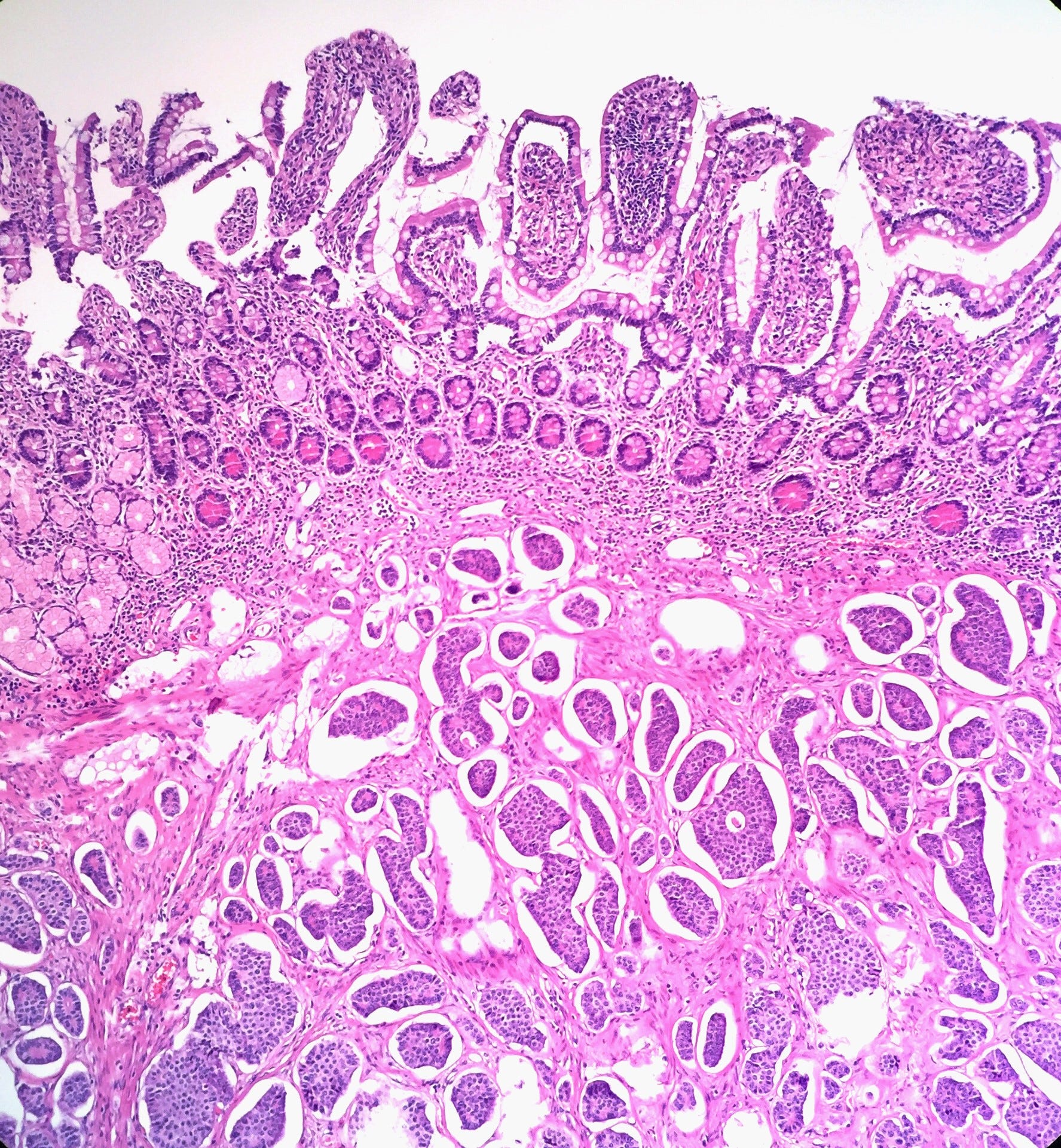

The Basics
Small bowel NETs that have reached the lymph nodes and liver are usually treatable for many years, often a decade or more for low-grade tumors. This guide gathers the questions, options, trials, and research to bring to appointments. It is background reading, not medical advice; the care team knows the specifics. For informational purposes only.
Where it starts: usually the ileum, the last part of the small intestine.
How it spreads: first to lymph nodes in the mesentery (the tissue that carries blood vessels to the bowel), then to the liver.
Why the mesentery matters: nodal spread can trigger scarring (fibrosis) that kinks the bowel or squeezes its blood supply. This is a common reason for surgery even when the liver is involved.
Key numbers to know: grade (G1, G2 or G3), Ki-67 percentage, whether tumors light up on a somatostatin receptor (SSTR) PET scan, and roughly what share of the liver is involved.
Carcinoid syndrome: flushing and diarrhea from hormones the tumor releases, most often once the liver is involved. It also puts the heart valves at risk, so regular echocardiograms matter.
Contents:
-Questions to ask the care team
-Treatment options at a glance
-Clinical trials currently recruiting
Newly diagnosed, before other treatment
After progression on somatostatin analogs (no prior PRRT)
After prior PRRT
Somatostatin analog questions
-Key research papers
-Appointment notes
Not much out there on my cancer, this cancer. Thank you. Oncologist always say, “it is slow growing”, and for many it is. For many like me, it is slow then it’s lightning bolt fast. It fools you in to thinking it’s slow only to hit the acceleration. Thanks for highlighting this cancer a bit.