
1. Introduction: The Social Media Hype vs. Laboratory Reality
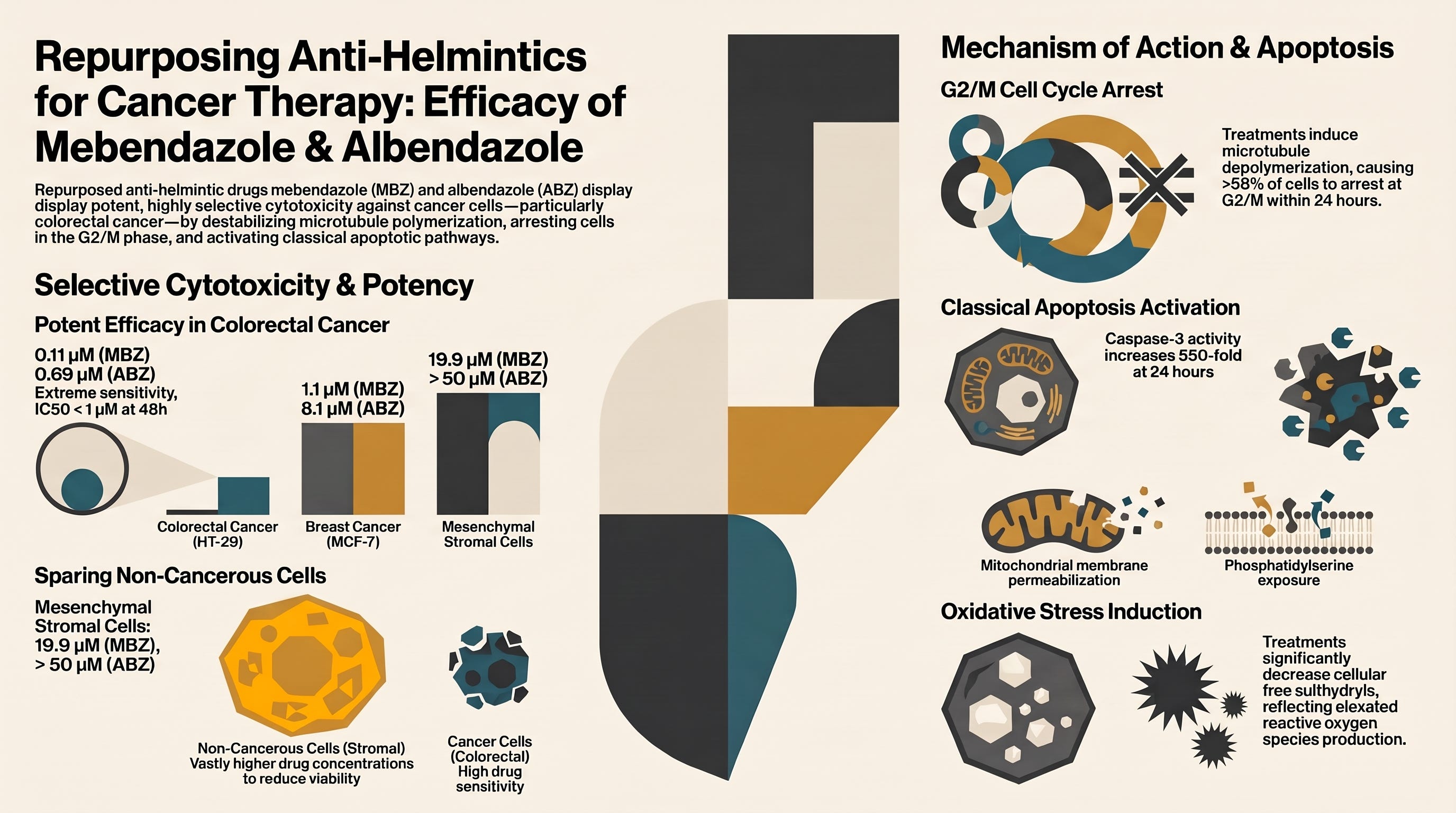
In recent years, common anti-helminthic (antiparasitic) medications—ranging from human prescription drugs like mebendazole and albendazole to veterinary dewormers like fenbendazole and ivermectin—have migrated from agricultural feed stores and pharmacy shelves directly into viral cancer discussions. Driven by social media anecdotes, online forums, and high-profile claims, thousands of patients facing advanced cancer diagnoses are exploring off-label antiparasitic regimens as alternative cures.
This phenomenon creates a complex scientific dialogue. On one side, preclinical laboratory experiments do show that these compounds exert genuine biological effects against cancer cells in culture dishes and animal models. On the other side, real-world self-treatment carries documented health risks and can generate temporary, misleading clinical results that patients easily misinterpret as permanent cures.
The purpose of this article is to bridge the gap between public interest and evidence-based medicine. By examining recent laboratory studies and human case reports, we distill four critical, science-backed takeaways to separate cellular facts from clinical fiction.
