
Within the 130-case classification archive, central nervous system (CNS) metastases (Pattern 4) and endocrine-resistant disease following CDK4/6 inhibitor therapy (Pattern 6) represent two of the most clinically compelling hypothesis-generating subgroups.
1. Central Nervous System & Brain Metastases (Pattern 4 / S7)
Cases involving brain or leptomeningeal metastases are particularly notable because the blood-brain barrier (BBB) typically restricts the penetration of many standard systemic cancer therapies. The archive highlights a distinct cluster of cases with reported CNS responses:
Individual Case Data from the Matrix:
Case 35 (Stage IV TNBC, Brain + Lung): The patient received ivermectin and mebendazole alongside prior/concurrent conventional therapy, with imaging reportedly showing shrinking brain and pulmonary lesions (Evidence Tier E3).
Case 39 (Stage IV, Brain + Lung): Treated with ivermectin, mebendazole, and CBD. The narrative reported measurable reductions in brain metastases, including a calculated volume reduction of up to ~96% on serial imaging (Evidence Tier E3).
Case 46 (Stage IV, Brain): Documented brain metastasis regression (Evidence Tier E2).
Case 49 (Stage IV, Brain + Nodes + Bone): Treated with ivermectin, mebendazole, and DMSO. Imaging reportedly documented a reduction in multiple brain lesions alongside symptomatic improvement (Evidence Tier E3).
Case 70 (Stage IV TNBC, Brain): A patient with triple-negative disease treated with ivermectin and mebendazole, reporting reduction of both intracranial and extracranial tumor burden (Evidence Tier E3).
Case 117 (Stage IV Leptomeningeal Disease): A rare report involving leptomeningeal carcinomatosis treated with ivermectin and mebendazole, documenting clinical improvement after ~10 months (Evidence Tier E2).
Archive Analysis & Methodological Critique:
Mechanistic Question: Whether mebendazole, fenbendazole, or ivermectin cross the blood-brain barrier in therapeutically meaningful concentrations cannot be resolved through patient narratives alone.
Evidentiary Gaps: Vague subjective descriptions such as “brain lesions are better” lack diagnostic rigor. The analysis emphasizes that future CNS research requires dedicated cohorts evaluated with standardized brain MRI protocols and accepted intracranial criteria (such as RANO-BM).
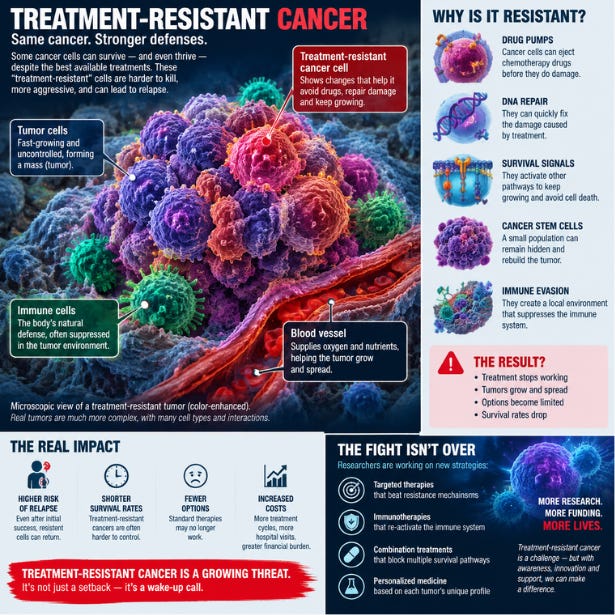
2. Treatment-Resistant Disease & CDK4/6 Inhibitor Progression (Pattern 6 / S5)
Another recurring signal involves patients whose hormone receptor–positive breast cancer progressed despite standard targeted therapy—most notably following the failure of CDK4/6 inhibitors (such as ribociclib/Kisqali).
Individual Case Data from the Matrix:
Case 3 (Stage IV ER+/PR+/HER2−, Bone): Rather than stopping conventional care, the patient received a combination of fenbendazole and ivermectin added to fulvestrant + ribociclib + letrozole, resulting in normalization of CA27-29 markers and a reported PET “no evidence of disease” (NED) status (Evidence Tier E3).
Case 69 (Stage IV): Initiated a repurposed protocol specifically following documented disease progression on ribociclib, with a subsequent clinical/imaging response reported (Evidence Tier E2).
Case 119 (Stage IV, Liver + Gallbladder): Initiated ivermectin and fenbendazole after ribociclib failure, reporting a radiographic remission after two months (Evidence Tier E3).
Case 121 (Stage IV, Bone): Maintained on ribociclib while adding ivermectin and fenbendazole, reporting near-complete remission (Evidence Tier E3).
Preclinical Biological Plausibility:
Overcoming Endocrine Resistance: Laboratory research (such as Rujimongkon et al.) tested ivermectin on hormone-resistant breast cancer cell lines that had lost sensitivity to therapies like tamoxifen or fulvestrant.
Wnt/β-Catenin & EMT Inhibition: In these models, ivermectin suppressed overactive Wnt signaling (reducing Wnt5a/b ligands and the LRP6 receptor) and inhibited epithelial-to-mesenchymal transition (EMT), restoring hormonal sensitivity and outperforming palbociclib (Ibrance) in blocking specific spread-related cellular pathways in vitro.
Archive Analysis & Methodological Critique:
Re-Sensitization vs. Treatment Switching: These cases raise the hypothesis of whether repurposed agents might reverse acquired resistance or act as pathway-sensitizing adjuvants.
High Risk of Bias: The analysis warns that this pattern is exceptionally vulnerable to selection bias and regression to the mean. Patients who happen to experience an unexpected, favorable response after exhausting conventional lines are disproportionately shared on public platforms, whereas treatment failures are rarely documented.
Sources
The references for the article entitled “Oncology Case Analysis” (which evaluates the 130-case classification system, specifically focusing on Pattern 4: Central Nervous System (CNS) and Brain Metastases [Cases 35, 39, 46, 49, 70, 117] and Pattern 6: Endocrine Resistance and CDK4/6 Inhibitor Progression [Cases 3, 69, 119, 121]):
1. Primary Case Analysis Sources
Structured Case-Series Repository (Primary Dataset):
Cancer Advisor | OneDayMD. (2026, September 1). Ivermectin, mebendazole and fenbendazole for breast cancer: A structured case-series analysis of 130 reports. Cancer Advisor. https://cancer.aestheticsadvisor.com/2026/09/ivermectin-mebendazole-fenbendazole-breast-cancer.html
(The core repository establishing the clinical coding matrix, intracranial response documentation [Pattern 4 / S7], CDK4/6 inhibitor progression cohorts [Pattern 6 / S5], and causal attribution criteria A1–A5).Comprehensive Case Repository & Multi-Agent Regimens:
OneDayMD Editorial Team. (2026, November 10). Fenbendazole, ivermectin and mebendazole for cancer: Case series of 800+ case reports (November 2026 update) (F. Yap, Med. Rev.). The Medical Advisor. https://www.onedaymd.com/2024/02/fenbendazole-cancer-success-stories.html
(Source for concurrent multi-drug protocols, dosing schedules, and patient progression narratives).
2. Preclinical Research on Endocrine Resistance & CDK4/6 Progression (Pattern 6)
Overcoming Endocrine Resistance & Wnt/EMT Pathway Downregulation:
Rujimongkon, K., Adchariyasakulchai, P., Boonyaratsewee, C., Horpratraporn, K., & Ketchart, W. (2026). Ivermectin inhibits ER, HER2, and TGF-β pathways in ER-positive and endocrine-resistant breast cancer cells. PLoS ONE, 21(4), Article e0348260. https://doi.org/10.1371/journal.pone.0348260
(Laboratory investigation demonstrating that ivermectin downregulates Wnt signaling [suppressing Wnt5a/b and LRP6] and inhibits epithelial-to-mesenchymal transition [EMT], restoring hormonal sensitivity in resistant breast cancer lines and outperforming palbociclib in vitro).Chemotherapy and Endocrine Synergy at Achievable Concentrations:
Juarez, M., Schcolnik-Cabrera, A., Dominguez-Gomez, G., Chavez-Blanco, A., Diaz-Chavez, J., & Duenas-Gonzalez, A. (2020). Antitumor effects of ivermectin at clinically feasible concentrations support its clinical development as a repositioned cancer drug. Cancer Chemotherapy and Pharmacology, 85(6), 1153–1163. https://doi.org/10.1007/s00280-020-04041-z
(Demonstrates in vitro synergistic cytotoxicity when pairing ivermectin with hormonal agents such as tamoxifen and cytotoxic agents).
3. Central Nervous System (CNS) & Neuro-Oncology References (Pattern 4)
Blood-Brain Barrier Penetration & Intracranial Tubulin Disruption:
Bai, R. Y., Staedtke, V., Aprhys, C. M., Gallia, G. L., & Riggins, G. J. (2011). Antiparasitic mebendazole shows survival benefit in 2 preclinical models of glioblastoma multiforme. Neuro-Oncology, 13(9), 974–982.
(Foundational preclinical study demonstrating that mebendazole crosses the blood-brain barrier to bind tubulin, inhibit microtubule assembly, and extend survival in intracranial tumor models).Standardized Evaluation Criteria for CNS Metastases (RANO-BM):
Lin, N. U., Lee, E. Q., Aoyama, H., Barani, I. J., Baumert, B. G., Brown, P. D., Camidge, D. R., Chang, S. M., Dancey, J., Gaspar, L. E., Harris, G. J. R., Hodi, F. S., Kalkanis, S. N., Linskey, M. E., Macdonald, D. R., Margolin, K., Mehta, M. P., Schiff, D., Soffietti, R., … Wen, P. Y. (2015). Response assessment in neuro-oncology brain metastases (RANO-BM) criteria: A consensus proposal. The Lancet Oncology, 16(6), e270–e278.
(The formal neuro-radiological response criteria cited in the analysis as mandatory for verifying intracranial therapeutic response versus subjective symptom reports).
4. Benzimidazole Repurposing Overviews
Antitumor Mechanisms & Microtubule Targeting:
Son, D. S., Lee, E. S., & Adunyah, S. E. (2020). The antitumor potentials of benzimidazole anthelmintics as repurposing drugs. Immune Network, 20(4), Article e29. https://doi.org/10.4110/in.2020.20.e29
Song, B., Park, E. Y., Kim, K. J., & Ki, S. H. (2022). Repurposing of benzimidazole anthelmintic drugs as cancer therapeutics. Cancers, 14(19), Article 4601. https://doi.org/10.3390/cancers14194601
(Comprehensive reviews of the pharmacokinetic and pharmacodynamic profiles of mebendazole and fenbendazole across systemic and metastatic models).