
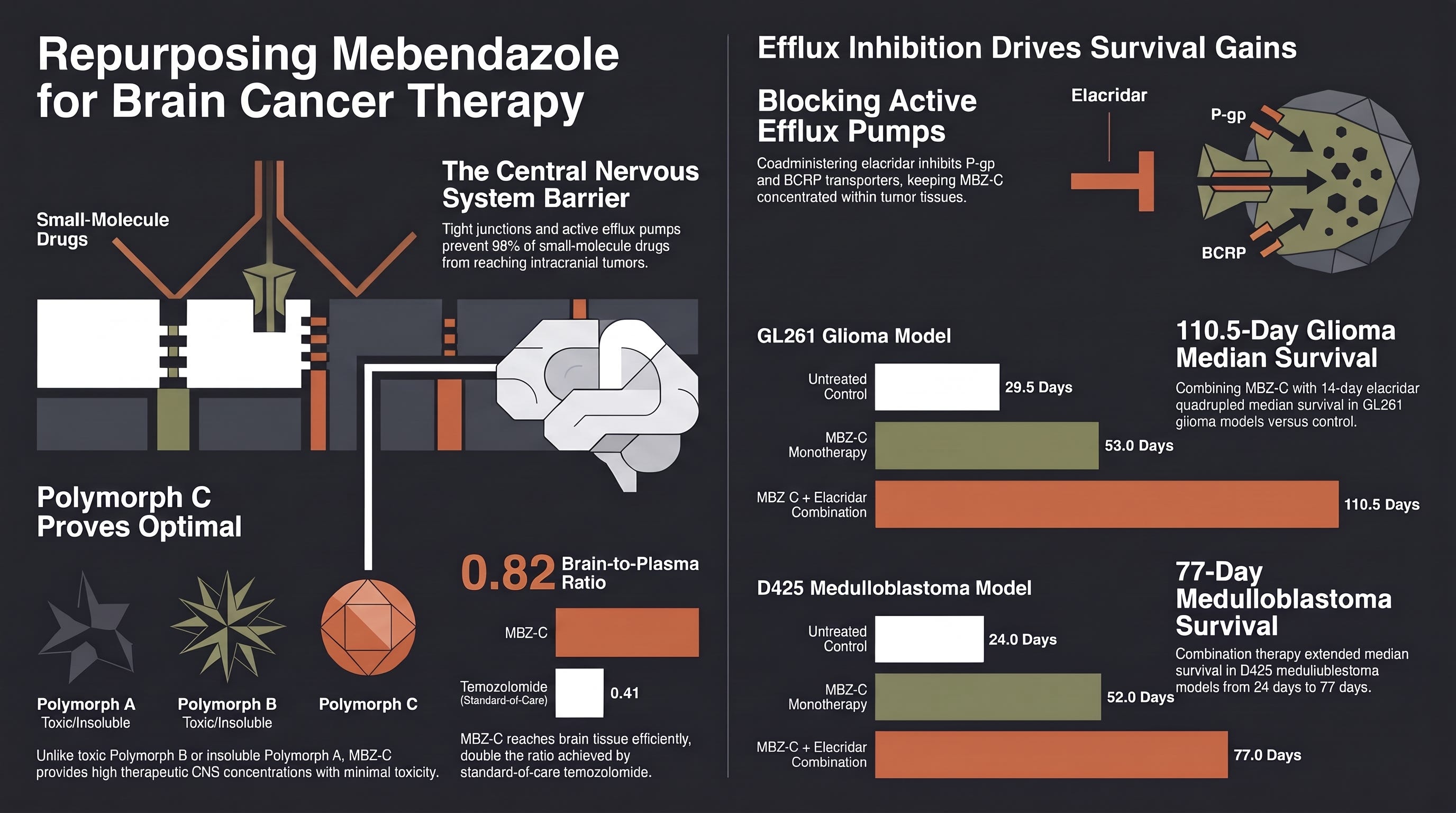
Brain cancer therapy faces significant therapeutic obstacles, primarily driven by the challenge of delivering effective drug concentrations across the central nervous system (CNS). The research focuses on overcoming these delivery hurdles through the repurposing of the small-molecule antiparasitic drug mebendazole (MBZ), characterizing its crystalline polymorphs, and utilizing efflux pump inhibition to improve outcomes in preclinical glioma and medulloblastoma models.
1. Major Obstacles in Brain Cancer Therapy
The Blood–Brain Barrier (BBB): Central nervous system malignancies remain exceptionally difficult to treat because most systemically administered therapies fail to reach effective therapeutic concentrations within intracranial tumors. The tight junctions of CNS capillary endothelial cells block large and hydrophilic molecules; as a result, an estimated ~2% of small-molecule drugs can effectively cross the BBB.
Active Efflux Transporters: Beyond mechanical tight junctions, the BBB utilizes active ATP-binding cassette efflux pumps, such as P-glycoprotein (P-gp) and breast cancer resistance protein (BCRP), which actively pump therapeutic agents back into systemic circulation.
