
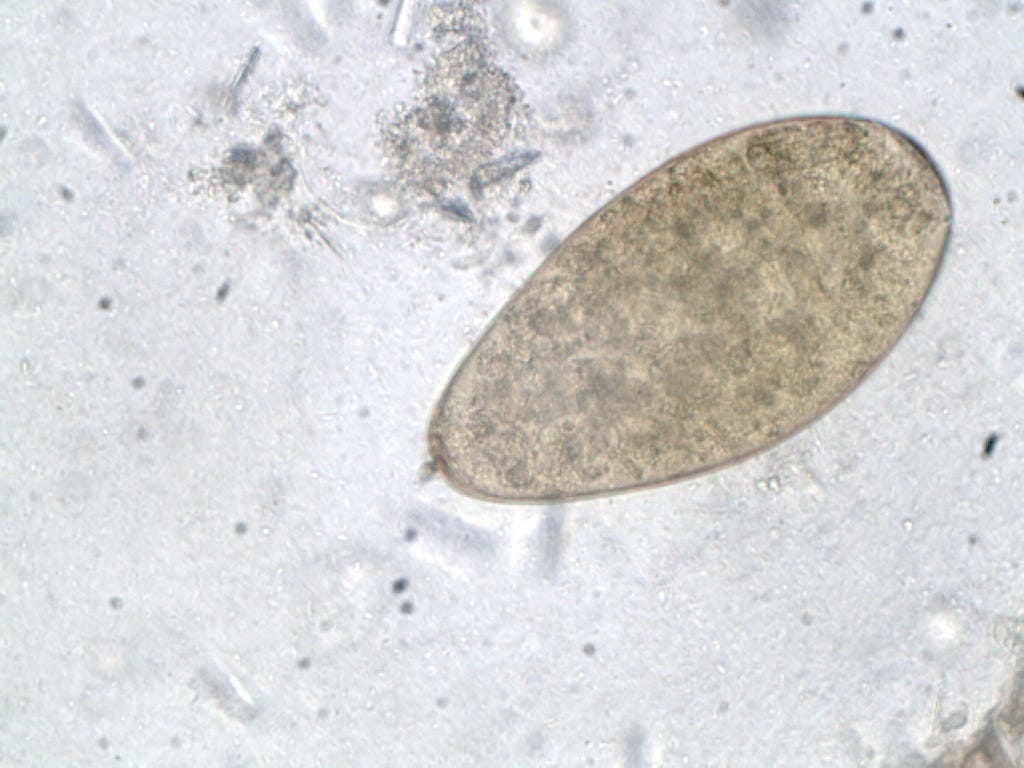
Cancer cells survive, invade host tissue, and evade immune destruction by co-opting deeply conserved, evolutionarily honed biological strategies used by parasitic helminths (parasitic worms)1. This convergent behavior spans tissue remodeling, biomechanics, migration, blood vessel formation, energy metabolism, and immune manipulation:
1. Proteolytic ECM Degradation and Tissue Invasion
Parasitic Strategy: Infective larvae of parasitic helminths (such as the hookworm Necator americanus) penetrate host skin and tissues by secreting aspartic, serine, and metalloproteinases that degrade extracellular matrix (ECM) components like collagen, elastin, and fibronectin.
Cancer Mimicry: Malignant cells (such as melanoma) similarly deploy broad proteolytic enzymes, particularly matrix metalloproteinases (MMP7, MMP11, MMP14). Tumor cells concentrate these enzymes in specialized actin-rich membrane protrusions called invadopodia to break down ECM barriers and invade surrounding tissues.
2. Reduced Mechanical Cell Stiffness
Parasitic Strategy: Atomic force microscopy shows that invasive helminth larvae have low mechanical stiffness, allowing them to squeeze through dense host tissue barriers.
Cancer Mimicry: Metastatic cancer cells undergo cytoskeletal and nuclear adaptations that make them over 70% softer than their non-malignant counterparts. This reduced mechanical rigidity reflects a shared biomechanical strategy for navigating tight physical constraints during invasion and bloodstream entry.
3. Directed Migration and Organ Tropism
Parasitic Strategy: Helminths follow highly specialized, non-random migratory routes to reach specific permissive organ niches (e.g., N. americanus larvae penetrate skin capillaries, travel through the bloodstream to the lungs, and migrate to the small intestine).
Cancer Mimicry: Disseminating tumor cells exhibit directional migration guided by soluble factors and ECM components, showing selective organ tropism (e.g., melanoma cells invade lymphatics and blood vessels to metastasize selectively to the lungs, liver, bones, and brain).
4. Induction of Angiogenesis
Parasitic Strategy: Parasitic flatworms (such as Schistosoma mansoni) reside within blood vessels and release soluble egg antigens that upregulate vascular endothelial growth factor (VEGF) and stimulate endothelial cell proliferation to increase blood flow.
Cancer Mimicry: Tumors rely heavily on VEGF secretion to stimulate neoangiogenesis, recruiting new blood vessels to secure oxygen, glucose, and nutrients necessary for rapid growth.
5. Preferential Anaerobic Glycolysis (Warburg Effect)
Parasitic Strategy: Adult parasitic helminths (such as schistosomes) rely primarily on anaerobic glucose metabolism even in oxygen-rich host environments.
Cancer Mimicry: Cancer cells preferentially undergo anaerobic glycolysis, converting glucose into lactate under oxygen-rich conditions (the Warburg effect). Furthermore, tumor-derived lactic acid acts as an immunosuppressive factor that suppresses cytotoxic immune cells.
6. Shared Immune Evasion Tactics
Both helminths and cancer cells deploy remarkably similar immunomodulatory mechanisms to prevent clearance by host immune defenses:
Treg Recruitment: Helminths secrete TGF-β mimics (such as H. polygyrus Hp-TGM) to expand immunosuppressive regulatory T cells (Tregs). Tumors similarly secrete TGF-β to recruit tumor-infiltrating Tregs that block effector T-cell activity.
Upregulation of Immune Checkpoints: Helminths induce elevated expression of PD-1 and CTLA-4 on immune cells. Cancer cells exploit these same checkpoint pathways (expressing PD-L1 and inducing CTLA-4/PD-1) to trigger T-cell exhaustion.
Antigen Shedding: Parasite larvae (such as Dirofilaria immitis) rapidly shed surface antigens to avoid recognition. Cancer cells (such as multiple myeloma) proteolytically shed MICA and MICB ligands to downregulate activating NKG2D receptors on Natural Killer (NK) cells.
Molecular Mimicry: Helminths express host-like glycans (such as Lewis X) or absorb intact host MHC class-I molecules to appear as “self”18. Tumor cells exploit oncofetal glycosylation (mucin-type O-glycans) or alter MHC class-I expression to evade cytotoxic T-cell recognition.
Myeloid Cell Polarization: Helminths secrete chemokine mimics (such as Na-ASP-2) to recruit myeloid cells. Cancer cells secrete CSF-1 and CCL2 to recruit and polarize M2-like macrophages and N2-like neutrophils that support angiogenesis and metastasis.
Suppression of Epithelial Alarmins (IL-33): Helminths secrete proteins (such as HpARI) to trap the epithelial alarmin cytokine IL-33, blocking type-2 immune activation. Metastatic cancer cells similarly downregulate IL-33 expression during the transition to metastatic disease to escape type-2 immune surveillance.
28 Sources
Title: The Antitumorigenic Potentials of Benzimidazole Anthelmintics as Repurposing Drugs
Authors: Deok-Soo Son, Eun-Sook Lee, Samuel E. Adunyah
Journal: Immune Network
Publication Details: 2020, Vol. 20, No. 4, Article e29
DOI: 10.4110/in.2020.20.e29
Title: Teaching an old dog new tricks: The case of Fenbendazole
Authors: Ioanna Vlachou, Panagiotis Parsonidis, Alexandra Mamagkaki, Ioannis Bouris, Ioannis Papasotiriou
Journal: Cancer Treatment and Research Communications
Publication Details: 2022, Vol. 32, Article 100601
DOI: 10.1016/j.ctarc.2022.100601
Title: Redox-mediated Anticancer Activity of Fenbendazole
Authors: Severina Semkova, Boryana Nikolova, Dimitar Ivanov, Georgi Apostolov, Ivan Tsachev, Albena Alexandrova, Rumiana Bakalova, Zdravko Zlatev
Journal: Anticancer Research
Publication Details: 2023, Vol. 43, No. 3, pp. 1207–1212
DOI: 10.21873/anticanres.16267
Title: Fenbendazole inhibits cell proliferation and promotes apoptosis of ovarian cancer cells by inducing mitotic catastrophe
Authors: Xin Wang, Wenda Tian, Na Wang, Xiaoxiao Yang, Lin Lin, Zhaocan Liu, Tian Tian, Chaoyan Wang, Hongying Yang, Yue Jia, Hongping Zhang
Journal: BMC Cancer
Publication Details: 2024, Vol. 24, Article 1593
DOI: 10.1186/s12885-024-13361-9
Title: Cocrystals of Fenbendazole with Enhanced in vitro Dissolution Performance
Authors: K. Blessi Priyanka, T. S. Ramya, K. Swarnalatha, G. Sushmitha, A. Ara, T. S. Srujana, B. Swapna
Journal: European Chemical Bulletin (Eur. Chem. Bull.)
Publication Details: 2023, Vol. 12, Special Issue 8, pp. 9056–9061
DOI: 10.31838/ecb/2023.12.Si8.826
Title: Oral Fenbendazole for Cancer Therapy in Humans and Animals
Authors: Jolie Nguyen, Thai Q. Nguyen, Bo Han, Ba X. Hoang
Journal: Anticancer Research
Publication Details: 2024, Vol. 44, No. 9, pp. 3725–3735
DOI: 10.21873/anticanres.17197
Title: Fenbendazole and Diisopropylamine Dichloroacetate Exert Synergistic Anti-cancer Effects by Inducing Apoptosis and Cell Cycle Arrest in A549 Lung Cancer Cells
Authors: Thai Q. Nguyen, Jolie Nguyen, Bo Han, Ba X. Hoang
Journal: Anticancer Research
Publication Details: 2024, Vol. 44, No. 11, pp. 4761–4772
DOI: 10.21873/anticanres.17302
Title: Ferroptosis Induction by Fenbendazole Combined With Photothermal Therapy Triggers Dual-Immunotherapy Against Bladder Cancer
Authors: Xiaojian Xu, Rui Liang, Anguo Zhao, Jun Zhang, Rongkang Li, Yang Liu, Dashi Deng, Qi Zhuang, Lisha Liu, Lei Peng, Miao Li, Xuedong Wei, Yuhua Huang, Shaohua Zhang, Liang Cheng, Jianquan Hou
Journal: Advanced Science
Publication Details: 2026, Vol. 13, No. 31, Article e2505669 / 74876
DOI: 10.1002/advs.202505669
Title: Case Studies of Patients Who Cured Their Own Stage 4 Cancers
Author: Jacqueline
Publication Platform: Deep Roots at Home
Publication Date: August 14, 2024
URL: deeprootsathome.com/case-studies-of-patients-who-cured-their-own-stage-4-cancers/
Title: Exceptional Repositioning of Dog Dewormer: Fenbendazole Fever
Authors: Tania Sultana, Umair Jan, Hyunsu Lee, Hyejin Lee, Jeong Ik Lee
Journal: Current Issues in Molecular Biology (Curr. Issues Mol. Biol.)
Publication Details: 2022, Vol. 44, No. 10, pp. 4977–4986
DOI: 10.3390/cimb44100338
Title: Fenbendazole acts as a moderate microtubule destabilizing agent and causes cancer cell death by modulating multiple cellular pathways
Authors: Nidhi Dogra, Abhisheak Kumar, Tapas Mukhopadhyay
Journal: Scientific Reports
Publication Details: 2018, Vol. 8, Article 11926
DOI: 10.1038/s41598-018-30158-6
Title: Fenbendazole as a Treatment for Diffuse Large B-Cell Lymphoma
Authors: Anas Abughanimeh, Theujus Evans, Alok Kallam
Journal: Annals of Hematology & Oncology
Publication Details: 2020, Vol. 7, No. 2, Article 1284
Title: From Deworming to Cancer Therapy: Benzimidazoles in Hematological Malignancies
Authors: Udayakumar Golla, Sagar Patel, Nirav Shah, Salvatore Talamo, Rahul Bhalodia, David Claxton, Sinisa Dovat, Arati Sharma
Journal: Cancers
Publication Details: 2024, Vol. 16, No. 20, Article 3454
DOI: 10.3390/cancers16203454
Title: Anticancer role of flubendazole: Effects and molecular mechanisms (Review)
Authors: Xing Xing, Zongning Zhou, Hongwei Peng, Shaoping Cheng
Journal: Oncology Letters
Publication Details: 2024, Vol. 28, No. 6, Article 558
DOI: 10.3892/ol.2024.14691
Title: Screening of Benzimidazole-Based Anthelmintics and Their Enantiomers as Repurposed Drug Candidates in Cancer Therapy
Authors: Rosalba Florio, Simone Carradori, Serena Veschi, Davide Brocco, Teresa Di Genni, Roberto Cirilli, Adriano Casulli, Alessandro Cama, Laura De Lellis
Journal: Pharmaceuticals
Publication Details: 2021, Vol. 14, No. 4, Article 372
DOI: 10.3390/ph14040372
Title: Overcoming cancer therapeutic bottleneck by drug repurposing
Authors: Ying Xia, Ming Sun, Hai Huang, Wei-Lin Jin
Journal: Signal Transduction and Targeted Therapy
Publication Details: 2024, Vol. 9, Article 101
DOI: 10.1038/s41392-024-01808-1
Title: Repurposing of Benzimidazole Anthelmintic Drugs as Cancer Therapeutics
Authors: Bomi Song, Eun Young Park, Kwang Joon Kim, Sung Hwan Ki
Journal: Cancers
Publication Details: 2022, Vol. 14, No. 19, Article 4601
DOI: 10.3390/cancers14194601
Title: From Deworming to Cancer Therapy: Benzimidazoles in Hematological Malignancies
Authors: Udayakumar Golla, Sagar Patel, Nirav Shah, Salvatore Talamo, Rahul Bhalodia, David Claxton, Sinisa Dovat, Arati Sharma
Journal: Cancers
Publication Details: 2024, Vol. 16, No. 20, Article 3454
DOI: 10.3390/cancers16203454
Title: Fenbendazole Enhancing Anti-Tumor Effect: A Case Series
Authors: Ryan S. Chiang, Ali B. Syed, Jonathan L. Wright, Bruce Montgomery, Sandy Srinivas
Journal: Clinical Oncology: Case Reports
Publication Details: 2021, Vol. 4, No. 2, Article 1000159
Title: Flubendazole Plays an Important Anti-Tumor Role in Different Types of Cancers
Authors: Chaoran Chen, Yueming Ding, Huiyang Liu, Mengyao Sun, Honggang Wang, Dongdong Wu
Journal: International Journal of Molecular Sciences (Int. J. Mol. Sci.)
Publication Details: 2022, Vol. 23, No. 1, Article 519
DOI: 10.3390/ijms23010519
Title: Unexpected Antitumorigenic Effect of Fenbendazole When Combined with Supplementary Vitamins
Authors: Peng Gao, Chi V. Dang, John Watson
Journal: Journal of the American Association for Laboratory Animal Science (J. Am. Assoc. Lab. Anim. Sci. / JAALAS)
Publication Details: 2008, Vol. 47, No. 6, pp. 37–40
Title: Fenbendazole Exhibits Antitumor Activity Against Cervical Cancer Through Dual Targeting of Cancer Cells and Cancer Stem Cells: Evidence from In Vitro and In Vivo Models
Authors: Xi Lei, Yi Wang, Yuanyuan Chen, Jinyue Duan, Xin Gao, Zhongyi Cong
Journal: Molecules
Publication Details: 2025, Vol. 30, No. 11, Article 2377
DOI: 10.3390/molecules30112377
Title: Evaluation of the Drug–Polymer Compatibility and Dissolution Behaviour of Fenbendazole–Soluplus® Solid Dispersions Prepared by Hot-Melt Extrusion
Authors: Amirhossein Karimi, Gilberto S. N. Bezerra, Clement L. Higginbotham, John G. Lyons
Journal: Polymers
Publication Details: 2026, Vol. 18, No. 3, Article 333
DOI: 10.3390/polym18030333
Title: Drug repurposing from the perspective of pharmaceutical companies
Authors: Y. Cha, T. Erez, I. J. Reynolds, D. Kumar, J. Ross, G. Koytiger, R. Kusko, B. Zeskind, S. Risso, E. Kagan, S. Papapetropoulos, I. Grossman, D. Laifenfeld
Journal: British Journal of Pharmacology (Br. J. Pharmacol.)
Publication Details: 2018, Vol. 175, No. 2, pp. 168–180
DOI: 10.1111/bph.13858
Title: Screening of Benzimidazole-Based Anthelmintics and Their Enantiomers as Repurposed Drug Candidates in Cancer Therapy
Authors: Rosalba Florio, Simone Carradori, Serena Veschi, Davide Brocco, Teresa Di Genni, Roberto Cirilli, Adriano Casulli, Alessandro Cama, Laura De Lellis
Journal: Pharmaceuticals
Publication Details: 2021, Vol. 14, No. 4, Article 372
DOI: 10.3390/ph14040372
Title: Repositioning of the anthelmintic drug mebendazole for the treatment for colon cancer
Authors: Peter Nygren, Mårten Fryknäs, Bengt Ågerup, Rolf Larsson
Journal: Journal of Cancer Research and Clinical Oncology
Publication Details: 2013, Vol. 139, No. 12, pp. 2133–2140
DOI: 10.1007/s00432-013-1539-5
Title: Fenbendazole acts as a moderate microtubule destabilizing agent and causes cancer cell death by modulating multiple cellular pathways
Authors: Nidhi Dogra, Abhisheak Kumar, Tapas Mukhopadhyay
Journal: Scientific Reports
Publication Details: 2018, Vol. 8, Article 11926
DOI: 10.1038/s41598-018-30158-6
Title: Synergistic anti-tumor effect of fenbendazole and diisopropylamine dichloroacetate in immunodeficient BALB/c nude mice transplanted with A549 lung cancer cells
Authors: Thai Q. Nguyen, Uyen T. T. Phan, Mao V. Can, Dang H. Nguyen, Bo Han, Ba X. Hoang
Journal: Translational Lung Cancer Research (Transl. Lung Cancer Res.)
Publication Details: 2025, Vol. 14, No. 7, pp. 2509–2521
DOI: 10.21037/tlcr-2024-1272