
Cancer cell death can occur through multiple distinct, interconnected pathways. Based on research examining the repurposed anthelmintic fenbendazole, cancer cells can be driven to cell death through a pleiotropic mechanism involving mitotic catastrophe, p53-dependent apoptosis, metabolic starvation, and anti-angiogenesis.
1. Mitotic Catastrophe and Mitotic Cell Death
Microtubules are essential for mitotic spindle assembly and chromosome segregation during cell division. Microtubule-interfering agents disrupt this process:
Microtubule Destabilization: Fenbendazole acts as a moderate microtubule-destabilizing agent that binds to tubulin at the colchicine-binding site, distorting the cell’s microtubule framework.
G2/M Cell Cycle Arrest: Exposure causes an early elevation and stabilization of cyclin B1 / CDK1 complexes and upregulates phospho-histone H3 (Ser10), locking cells in the mitotic phase.
Caspase-Independent Mitotic Death: Following prolonged mitotic accumulation, cells undergo mitotic exit directly into cell death (mitotic catastrophe) without progressing to polyploidy or a G1-like state. Notably, this mitotic cell death is caspase-independent and unaffected by broad-spectrum caspase inhibitors like Z-VAD-FMK.
2. p53-Mediated Apoptosis
The p53 tumor suppressor protein acts as a central coordinator of apoptosis and genomic stability:
Wild-Type p53 Selectivity: Tumor cell lines expressing wild-type (WT) p53 (such as A549 and H460) exhibit significantly higher sensitivity to cell death compared to p53-mutant or p53-null cells.
Nuclear Accumulation & Transcriptional Activation: Fenbendazole promotes dose-dependent nuclear accumulation of WT p53, upregulating transcriptional target genes such as p21 and MDM2.
Mitochondrial Translocation: A pool of monoubiquitinated p53 translocates directly to the mitochondria. This triggers mitochondrial membrane depolarization (measured via JC-1 dye), cytochrome c release, and intrinsic apoptotic cell death.
3. Metabolic Starvation & Glycolytic Shutdown
Malignant cells rely heavily on accelerated aerobic glycolysis to generate energy and survival signals (the Warburg effect). Disrupting this energy pathway triggers metabolic cell death:
Inhibition of Glucose Import: Treatment suppresses cellular glucose uptake (measured via the fluorescent analogue 2-NBDG) and significantly decreases overall glucose consumption and lactate secretion.
Downregulation of GLUT-4 & Hexokinase II: Fenbendazole downregulates mRNA expression of the GLUT-4 glucose transporter and Hexokinase II (HKII).
Hexokinase II Enzymatic Blockade: By acting as a molecular mimic that stably binds to the glucose/G6P binding pocket of HKII, fenbendazole directly impairs HKII enzymatic activity, removing a key mitochondrial gatekeeper against apoptosis.
Induction of p53 Metabolic Targets: It induces p53-regulated metabolic target genes including TIGAR, SCO2, Glutaminase 2 (GLS2), and Proline oxidase, while enhancing the activity of the mitochondrial tumor suppressor Succinate Dehydrogenase (SDH).
4. In Vivo Tumor Suppression & Anti-Angiogenesis
In animal xenograft models (athymic nude mice bearing human NSCLC A549 tumors), these combined mechanisms translate into robust tumor destruction:
Tumor Regression: Oral administration (1 mg/mouse) leads to a marked reduction in both tumor volume and final tumor weight.
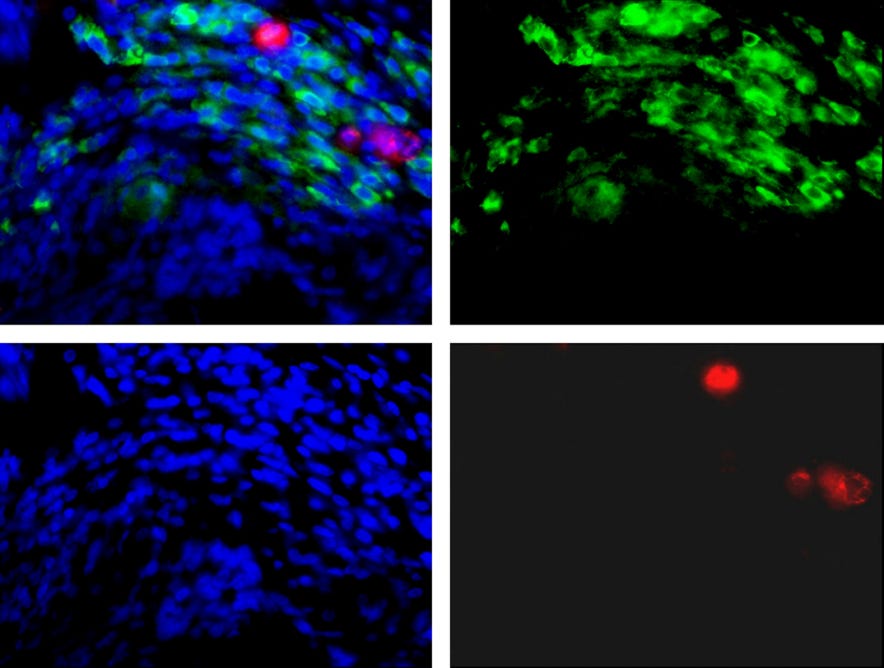
Intratumoral Apoptosis: TUNEL staining confirms a dense population of apoptotic nuclei within treated tumor tissue, alongside widespread p53-positive tumor cells.
Anti-Angiogenesis: Treated tumors show a reduction in intratumoral hemoglobin content and a severe depletion of CD31-positive endothelial cells, cutting off the tumor’s blood supply.
5. Synergistic Combination Therapy
Targeting cancer energy metabolism alongside tubulin dynamics creates strong synergistic cell death (Combination Index CI < 1):
Dichloroacetate (DCA): Synergizes strongly with fenbendazole (CI = 0.04 at 50% effective dose) by shifting cellular metabolism toward mitochondrial glucose oxidation over glycolysis.
2-Deoxyglucose (2-DG): Produces dual glycolytic blockade (CI = 0.21).
Paclitaxel / Taxol: Yields synergistic growth inhibition (CI = 0.52) across multiple dose ranges.
6. Bypassing Multidrug Resistance (MDR)
Unlike conventional microtubule agents (such as taxanes and vinca alkaloids), fenbendazole binds to the colchicine-binding site on tubulin and is neither a substrate nor an inhibitor of P-glycoprotein (P-gp / MDR1). Consequently, multidrug-resistant cancer cells that overexpress P-gp efflux pumps remain fully susceptible to fenbendazole-induced cell death.
Dogra, N., Kumar, A., & Mukhopadhyay, T. (2018). Fenbendazole acts as a moderate microtubule destabilizing agent and causes cancer cell death by modulating multiple cellular pathways. Scientific Reports, 8, Article 11926. https://doi.org/10.1038/s41598-018-30158-6