
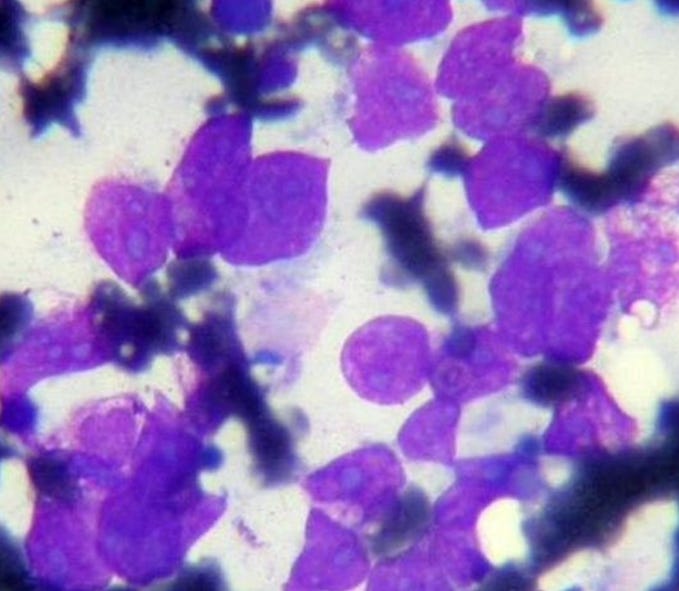
This medical case report details an elderly patient diagnosed with stage IVa diffuse large B-cell lymphoma who declined conventional chemotherapy and instead self-administered fenbendazole, an animal deworming medication. Over a period of several months, follow-up imaging scans revealed a remarkable regression of the patient’s cancer and shrinking lymph nodes. While laboratory studies suggest this antiparasitic agent may disrupt cellular structures critical for tumor growth, the medical community notes that further clinical research is necessary to definitively establish its safety and efficacy as a human oncology treatment.
Based on the case report detailing fenbendazole treatment in a human cancer patient, the documented clinical details, self-administered dosage regimen, and outcomes include:
1. Patient Presentation & Diagnosis
Clinical History: An 83-year-old male presented with fatigue, heartburn, and difficulty swallowing.
Biopsy & Staging: An esophagogastroduodenoscopy (EGD) identified a superficial duodenal ulcer; biopsy confirmed diffuse large B-cell lymphoma (DLBCL), GCB subtype. Fluorescence in Situ Hybridization (FISH) was negative for c-MYC, BCL2, and BCL6 rearrangements.
Metastatic Spread: PET/CT imaging revealed hypermetabolic disease involving the distal gastric antrum, proximal duodenum, peri-aortic lymph nodes, and pulmonary nodules, staging the patient with stage IVa DLBCL.
Declined Chemotherapy: The patient declined standard recommended chemotherapy due to concerns regarding side effects.
2. Treatment Regimen & Dosage Tapering
Initial Self-Administration: Based on self-directed research, the patient initiated oral fenbendazole at 1 g daily (fluctuating between 1 and 6 tablets daily depending on symptoms).
Dose Reduction for Toxicity: After 6 months, he developed peripheral neuropathy, prompting him to reduce his dosage to 1–3 tablets daily.
Further Tapering: Over the subsequent 3 months, he gradually tapered his intake down to a maintenance schedule of 3 pills weekly.
3. Clinical & Radiological Response
Initial Lymph Node Regression: A follow-up CT scan obtained by his primary care physician after 6 months demonstrated smaller mediastinal lymph nodes.
Sustained Disease Improvement: Subsequent PET/CT scans confirmed progressive, interval improvement in overall lymphadenopathy and hypermetabolic lesions, with no new lesions detected.
Observed Regression: The treating oncologists noted a clear regression of his stage IVa DLBCL during this period.
4. Proposed Mechanisms & Preclinical Context
Microtubule Disruption: Fenbendazole is a broad-spectrum veterinary anthelmintic that binds and destabilizes microtubule tubulin, a mechanism analogous to established antineoplastic agents such as Vinca alkaloids and paclitaxel.
Preclinical Evidence Base:
Dogra et al. demonstrated anti-tumor effects in mice via microtubule destabilization, p53 pathway activation, and gene modulation.
Bai et al. documented activity in mouse brain tumor models.
Gao et al. observed significant inhibition of lymphoma growth in SCID mice when fenbendazole was combined with supplementary vitamins.
Duan et al. noted that fenbendazole was toxic to EMT6 mammary tumor cells in vitro but failed to inhibit solid tumor growth in vivo.
5. Clinical Caveats
The authors emphasize that although the patient experienced notable disease regression during fenbendazole use, it remains unknown whether fenbendazole alone caused the response or whether other unmeasured factors contributed. They conclude that formal clinical studies are required before evaluating fenbendazole as a safe or effective cancer therapy.
References
Abughanimeh, O., Evans, T., & Kallam, A. (2020). Fenbendazole as a treatment for diffuse large B-cell lymphoma. Annals of Hematology & Oncology, 7(2), Article 1284.
Bai, R.-Y., Staedtke, V., Aprhys, C. M., Gallia, G. L., & Riggins, G. J. (2011). Antiparasitic mebendazole shows survival benefit in 2 preclinical models of glioblastoma multiforme. Neuro-Oncology, 13(9), 974–982. https://doi.org/10.1093/neuonc/nor077
Dogra, N., Kumar A., & Mukhopadhyay, T. (2018). Fenbendazole acts as a moderate microtubule destabilizing agent and causes cancer cell death by modulating multiple cellular pathways. Scientific Reports, 8(1), Article 11926. https://doi.org/10.1038/s41598-018-30158-6
Duan, Q., Liu, Y., & Rockwell, S. (2013). Fenbendazole as a potential anticancer drug. Anticancer Research, 33(2), 355–362.
Gao, P., Dang, C. V., & Watson, J. (2008). Unexpected antitumorigenic effect of fenbendazole when combined with supplementary vitamins. Journal of the American Association for Laboratory Animal Science, 47(6), 37–40.
Golla, U., Patel, S., Shah, N., Talamo, S., Bhalodia, R., Claxton, D., Dovat, S., & Sharma, A. (2024). From deworming to cancer therapy: Benzimidazoles in hematological malignancies. Cancers, 16(19), Article 3454.
Liu, Y., & Barta, S. K. (2019). Diffuse large B-cell lymphoma: 2019 update on diagnosis, risk stratification, and treatment. American Journal of Hematology, 94(5), 604–616.
Nguyen, J., Nguyen, T. Q., Han, B., & Hoang, B. X. (2024). Oral fenbendazole for cancer therapy in humans and animals. Anticancer Research, 44(9), 3725–3735.