
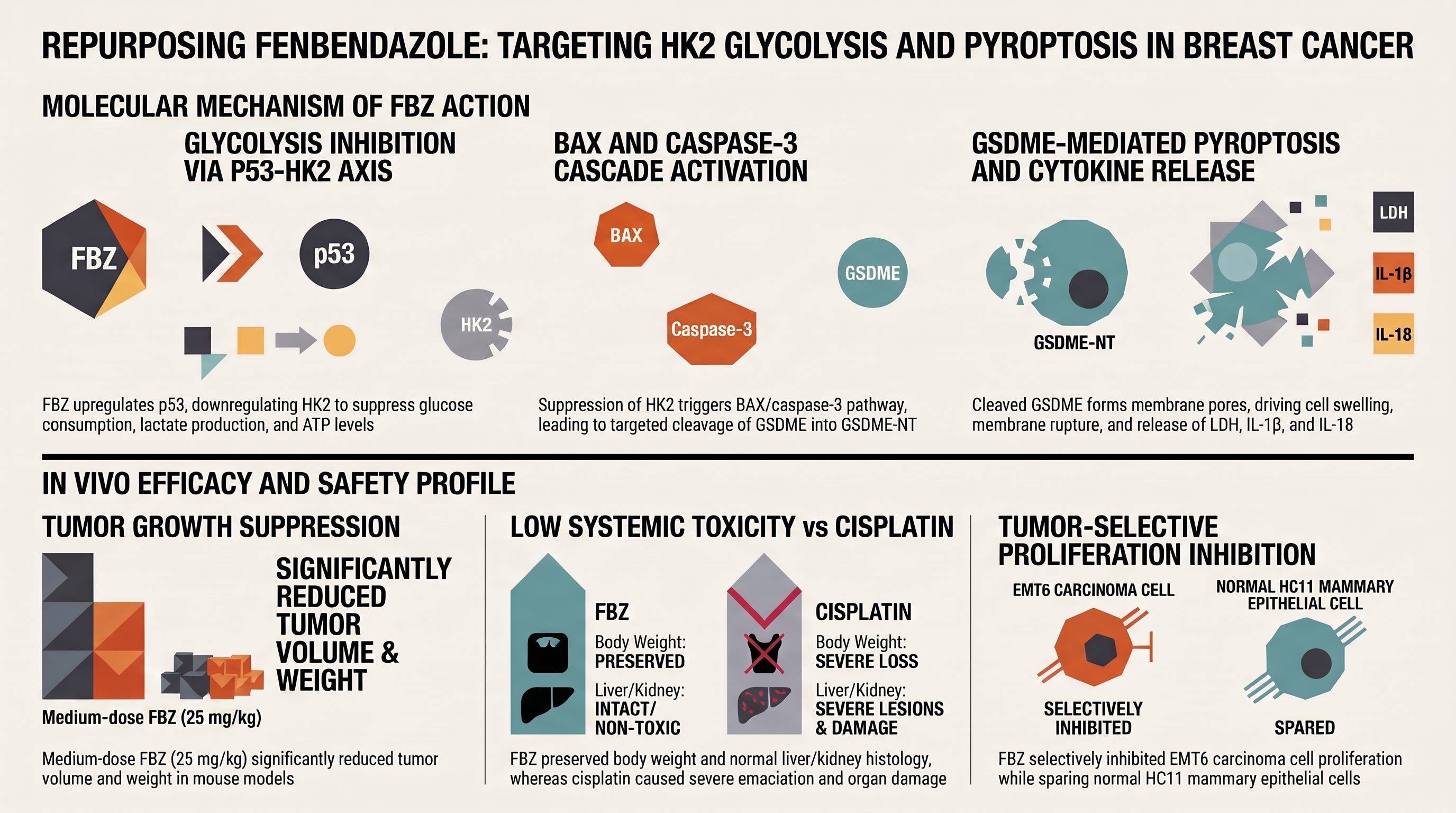
This research article investigates the promising anti-tumor efficacy and molecular mechanisms of fenbendazole, an affordable and safe antiparasitic medication, as a novel therapeutic candidate for breast cancer intervention. The study demonstrates that this compound effectively suppresses malignant tumor growth both in laboratory cell cultures and living animal models by triggering programmed cell death and curbing metabolic processes. Specifically, the findings reveal that the drug deactivates aerobic glycolysis via the downregulation of hexokinase 2, which subsequently activates a BAX/caspase-3/GSDME signaling cascade to drive pyroptotic cell destruction. This article discusses in vitro and in vivo preclinical testing (lab & animal). Ultimately, this work highlights the critical link between cellular metabolism and inflammatory cell death, offering a strong pharmacological foundation for repurposing veterinary drugs in oncology while maintaining a favorable safety profile compared to traditional chemotherapy.
Fenbendazole (FBZ) suppresses breast cancer progression through a dual mechanism that couples metabolic reprogramming with pyroptosis—an inflammatory, programmed form of lytic cell death.
