
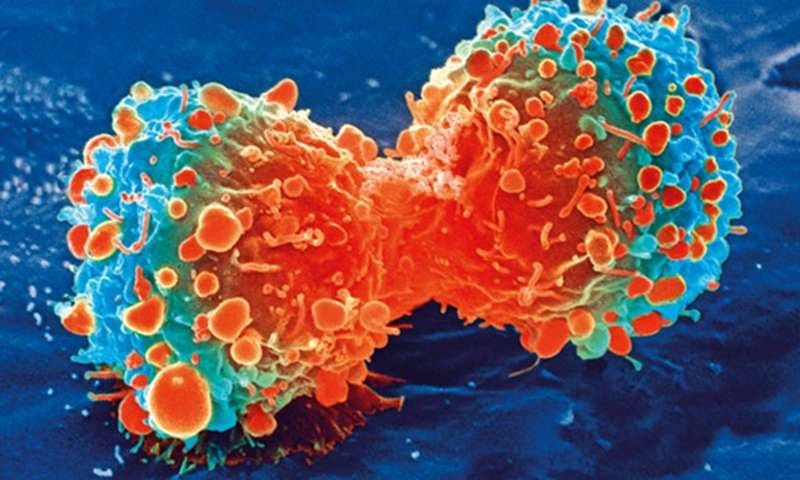
For patients and families facing cancer, hope and careful questions belong together. Fenbendazole—a medicine used to treat parasitic worms in animals—has attracted attention because of laboratory findings and personal accounts of recovery. Those findings give researchers questions worth investigating. They do not yet establish that fenbendazole treats cancer safely or effectively in people.
The most hopeful way to tell this story is to neither promise a breakthrough nor dismiss curiosity. It is to explain what scientists have observed, listen respectfully to patients’ experiences, and be clear about what remains unknown.
Why researchers are interested
The scientific interest in fenbendazole is not based solely on social media. In a study published in Scientific Reports, researchers found that it interfered with tubulin, a building block of the microscopic structures involved in cell division. In laboratory cancer cells, it also affected glucose uptake and proteins involved in using that fuel. In mice carrying transplanted human tumors, oral treatment inhibited tumor growth.
These results suggest several possible ways the drug might affect cancer biology. But the phrase “human cancer cells” needs careful reading: cells grown in a laboratory, or transplanted into mice, are not the same as patients receiving treatment. The findings support investigation, not a conclusion that taking fenbendazole will produce the same effects in a person.
Other experiments have explored different cancers. Researchers studying colorectal cancer cells resistant to the chemotherapy drug fluorouracil found that fenbendazole triggered programmed cell death and interrupted the cell-division cycle. This is a reason to investigate drug-resistant cancer biology—not evidence that fenbendazole overcomes chemotherapy resistance in patients.
A separate breast-cancer laboratory study found that triple-negative breast cancer cells were more vulnerable to fenbendazole-induced oxidative stress than another breast cancer cell line. The researchers also observed different effects in normal breast epithelial cells. Such differences are scientifically interesting because they may help identify which biological settings deserve further study, but this experiment did not test treatment in people.
The laboratory picture is not uniformly positive. In another study, fenbendazole damaged mouse mammary tumor cells in culture but did not slow tumor growth in living mice or improve radiation's antitumor effects. Including this result matters: a promising effect in a dish does not guarantee a useful medicine.
Joe Tippens: a hopeful story, with an important unanswered question
Joe Tippens is among the best-known people to credit fenbendazole with his recovery. In news coverage, he described having small-cell lung cancer that had spread widely and said that fenbendazole helped rid him of cancer. His account offers a powerful personal story of hope.
However, the same coverage reported that he also received an experimental cancer drug and took supplements. The American Cancer Society explains that the widely shared lung-cancer story involved participation in an immunotherapy clinical study at the same time as fenbendazole use.
That overlap prevents a reliable conclusion about what fenbendazole contributed, if anything. A recovery can be meaningful and encouraging without proving the explanation attached to it. Tippens’ story can motivate a research question; it cannot answer that question on its own.
What about other reports of human use?
The American Cancer Society notes that people with breast, prostate, skin, and other cancers have reported becoming “cancer-free” after taking fenbendazole. In most cases, however, they also received standard cancer treatments. These are reports of use and outcomes—not proof that fenbendazole caused the outcomes.
A published case-report abstract also describes regression of diffuse large B-cell lymphoma in a patient who declined chemotherapy and took fenbendazole. That observation is worth distinguishing from an online testimonial, but it remains an isolated report, not a controlled test.
Publication alone does not guarantee dependable evidence. A case series describing fenbendazole self-administration in people with breast cancer, prostate cancer, and melanoma is marked as retracted.
Protecting hope means taking safety seriously
Fenbendazole is not FDA-approved for any human use, and its safety and effectiveness as a cancer treatment have not been established. Experience treating parasites in animals does not provide the missing evidence in humans.
The American Society of Clinical Oncology advises against using fenbendazole either as a cancer treatment or as an addition to established treatment outside a well-designed clinical trial, citing the lack of established benefit and potential harms.
For patients and families, asking about fenbendazole should be a conversation, not a confrontation. Useful questions include: What evidence applies to this particular cancer? Could an unproven product interfere with current care? Are there appropriate clinical trials of repurposed medicines? Anyone already taking fenbendazole should tell their oncology team rather than stop or delay prescribed cancer treatment to follow an online account.
A hopeful next chapter is possible—but it must be earned
Fenbendazole has produced biological effects worth investigating in laboratory cancer models. It has also become part of personal recovery stories that deserve respectful, careful discussion. What is missing is robust clinical evidence showing whether it improves outcomes for people with cancer and whether any benefit outweighs its risks.
We support rigorous research, ask informed questions, and keep patients’ lives—not the popularity of a particular drug—at the center of the story.
What to Know About Fenbendazole | American Cancer Society, 2025.
Dogra et al., 2018. Fenbendazole acts as a moderate microtubule destabilizing agent and causes cancer cell death by modulating multiple cellular pathways. Scientific Reports.
Park et al., 2022. Anti-cancer effects of fenbendazole on 5-fluorouracil-resistant colorectal cancer cells. Korean Journal of Physiology and Pharmacology.
Semkova et al., 2023. Redox-mediated Anticancer Activity of Anti-parasitic Drug Fenbendazole in Triple-negative Breast Cancer Cells. Anticancer Research.
Duan et al., 2013. Fenbendazole as a Potential Anticancer Drug. Anticancer Research.
Kertscher, 2023. No proof that the dog deworming drug fenbendazole can cure human cancer – PolitiFact.
Abughanimeh et al., 2020. Fenbendazole as a Treatment for Diffuse Large B-CellLymphoma.
William Makis, 2025. Fenbendazole as an Anticancer Agent? A Case Series of Self-Administration in Three Patients.
Yamaguchi et al., 2021. Drug-Induced Liver Injury in a Patient with Nonsmall Cell Lung Cancer after the Self-Administration of Fenbendazole Based on Social Media Information. Case Reports in Oncology.
ASCO Clinical Notice: Recommending Against Ivermectin and Fenbendazole for Cancer Treatment, Outside of Clinical Trials | ASCO Connection.
You forgot to say there were a thousand people in that keytruda study and all died bar Joe. Another thing worth mentioning is back when Joe had a comments section below his blog " my cancer story rocks " a person asked him if he used high THC cannabis oil, to which he replied yes I did but as it's illegal substituted cannabidiol in my blog which is legal.