
Let’s talk about money and the expenses of accessing cancer care.
In 2025, about 26.7 million people in the U.S. had no health insurance at all. That figure comes from the U.S. Census Bureau, which reported that 26.7 million people (7.9%) were uninsured for the entire year. The most recent figure for private health coverage was 66.1% in 2024. That means roughly one-third of Americans—more than 110 million people—did not have private insurance. Most of those people had some form of public coverage, while 26.7 million had no coverage.
In 2025, the Census Bureau reported that employment-based insurance covered 53.5% of the population, followed by Medicare at 20.1%, Medicaid at 17.1%, and direct-purchase coverage at 10.5%. Public coverage overall was 35.8%.
The CDC reported that approximately two-thirds (66.2%) of people under age 65 had private insurance in 2025.
Who is most likely to be uninsured?
Adults ages 18–64 living in states that had not expanded Medicaid were almost twice as likely to be uninsured (18.1%) as adults in states that had expanded Medicaid (9.0%).
About 16% of people living below the poverty line had no health insurance, compared with about 3% of those living above 400% of the poverty level. Those figures are from 2024.
I live in Southwest Virginia. The region is officially designated and promoted as the “Heart of Appalachia.” In fact, my property is located in a city next to the town of Appalachia.
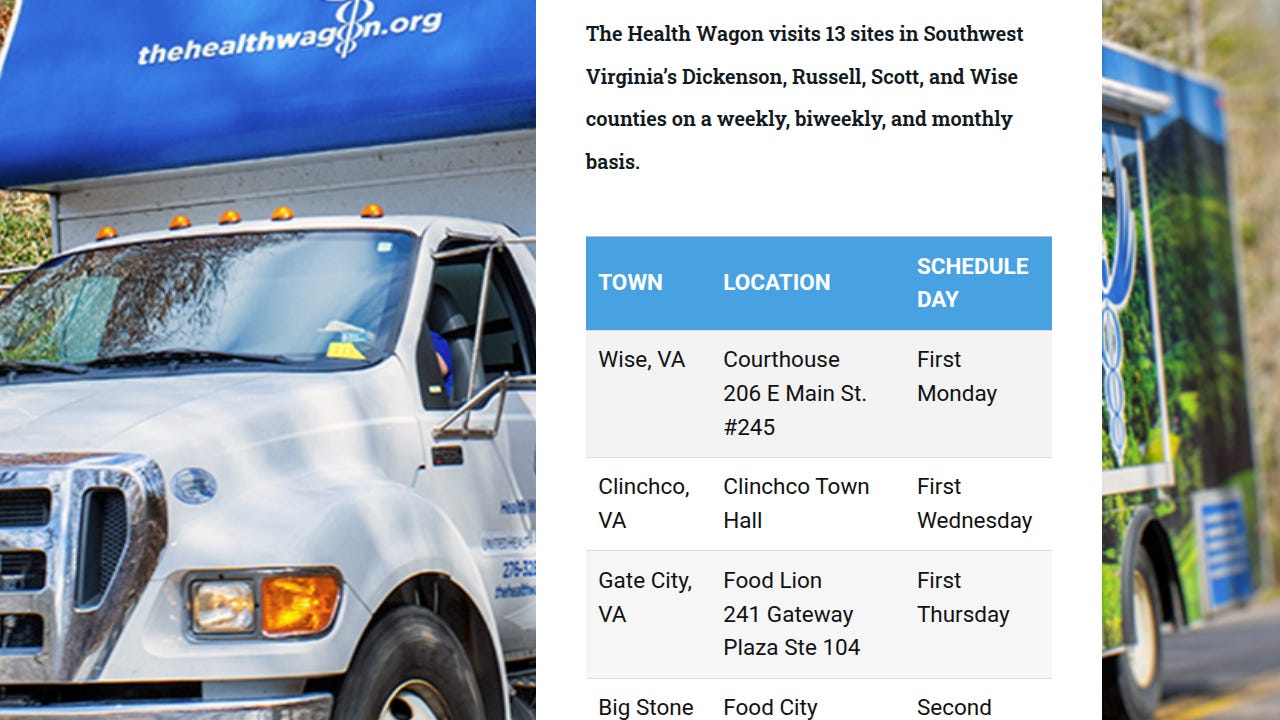
Down here in the mountains, many hardworking people are seriously underinsured. In the past year, I’ve known two adults who died of cancer. After becoming sick, they visited a local healthcare facility—often the traveling Health Wagon (Health Wagon). Since doctors are scarce around these parts, a family nurse practitioner usually informed them that they had cancer. They were told to go back to their trailer and die. Hospice care is well known in this area.
There was no family discussion about “What did the oncologist say?” or “Should I avoid chemotherapy because Facebook friends say it’s so toxic?” or “Maybe I should shop around for another oncologist like at the Mayo Clinic.” For these local cancer patients, discussions like this were simply not an option. Around 100 million Americans may end up in a similar, very final situation. These are not people living on welfare. They are US citizens who have worked hard their entire lives, raised children and grandchildren, and gone to church every week.
Their “defect”? They can’t afford private health insurance, and they certainly can’t afford an estimated $110,000 for chemotherapy—or the other potentially enormous costs associated with cancer treatment.
Going It Alone
If you are going it alone, seeking alternatives, and considering self-administering a medication such as fenbendazole because you believe you have no other options, here is some practical information that may help.
Regular blood tests can monitor your body’s response to medications over a short or extended period. In many parts of the U.S., you can get these tests without a doctor’s or hospital’s referral.
Need to monitor your liver enzymes? Chances are there is a lab within 30–45 minutes of your home where you can walk in, pay cash, have your blood drawn, and receive your results within 48 hours. When you compare these test results side by side every month or two, a critical pattern emerges.
How It Works:
You order and pay online, then book an appointment or walk in to a Quest or Labcorp patient service center for the draw. Technically, a doctor signs off, but it’s automatic. Labcorp notes that all OnDemand testing requires an order from an authorized healthcare professional, and they handle that for you, with no visit or referral on your end.
The two big labs (buy direct)
Labcorp OnDemand (ondemand.labcorp.com): the CMP is $49.
Quest Health (questhealth.com, formerly QuestDirect): the CMP is $44.10 on sale (normally $49), plus a $6 physician service fee. Its Liver Function Test Panel is $119.
Third-party resellers (often cheaper, same Quest/Labcorp draw sites)
TestWell: a CMP is $22.99, or $28.99 all-in when ordered alone, because of a $6 per-order processing fee.
Walk-In Lab: CMP-14 with eGFR for $29.
LabReqs, Personalabs, and Private MD Labs: $29.99, $36, and $63, respectively, for a CMP.
Jason Health (Quest): a Hepatic Function Panel for $28.
Ulta Lab Tests, Request A Test, JustLabs, and Life Extension also sell these. LabCorp OnDemand, Quest, Ulta Lab Tests, Marek Health, Life Extension, and Private MD Labs all let you order online, pay cash, and get results without a consultation.
A tip on the liver test: a CMP already includes the main liver markers (ALT, AST, alkaline phosphatase, bilirubin, albumin). A separate hepatic function panel adds items like direct bilirubin. Buying from a reseller is much cheaper than Quest’s $119 panel.
If you’re in New York
You can do this in most of the US, but there’s a catch that likely affects you: New York is one of the few states that blocks it. New York, New Jersey, and Rhode Island block most direct-to-consumer lab ordering, and if your billing address is in one of those states, LabCorp OnDemand and Quest’s consumer site will reject the order at checkout. More on workarounds at the end.
BioReference route: TestWell says New York and New Jersey orders go to BioReference instead of Quest or LabCorp because of state licensing rules. That makes it the only direct option I found that works in NY. It’s worth confirming at checkout.
Out of state: New Jersey residents often go to a LabCorp in Pennsylvania. From NYC, you could do the same with a Connecticut or Pennsylvania draw site, as long as the order uses an address there that you actually have. Some services check the billing address.
Through a provider: an urgent care or telehealth visit can write the order, and you then pay the lab’s cash price.
Prices change often, and resellers run frequent sales, so check the current price before booking.
Sources:
Lab Testing For Existing Cancer Patients
The big two labs sell only a few cancer tests directly. Tumor markers (CEA, CA-125, CA 19-9 and so on) are mostly sold through the resellers, which draw at the same Quest and Labcorp sites.
Labcorp OnDemand
PSA Prostate Cancer Screening Test (blood)
HPV Cervical Cancer Screening Test
ColoFIT colon cancer home test (stool, not blood): $89
Quest Health
Prostate Screening (PSA): $62.10 on sale, normally $69
HPV test and FIT stool test. Its cancer category also includes broader panels that evaluate symptoms commonly linked to cancer, such as chronic inflammation, fatigue, or unexplained weight loss.
Ulta Lab Tests (Quest) has the widest tumor-marker menu:
Individual markers it lists: PSA, CA-125, HE4/ROMA, CEA, CA 19-9, AFP, β-hCG, LDH, Thyroglobulin, Calcitonin, Chromogranin A, plus CA 15-3, CA 27.29, Inhibin A and B, SPEP, immunofixation, and free light chains.
Sample prices: CEA $28.95, CA 19-9 $43.95, CA 15-3 $46.95. They run frequent sales.
Bundles: a men’s comprehensive tumor-marker panel for $285.95, which includes AFP, CA 125, CA 19-9, CEA, CMP, a FIT stool test, and free and total PSA. There’s also a women’s version and a “Cancer Screening – Women” panel that adds CA 27.29.
Walk-In Lab
PSA, free-to-total PSA ratio, ultrasensitive PSA, a PSA hormone panel, CA 125, CEA, and CA 15-3.
Request A Test
A male comprehensive cancer panel covering CBC, CEA, PSA, AFP, CA 19-9, plus a $4.00 per order service fee.
What each marker is mainly for
PSA: prostate
CA-125, HE4: ovarian
CA 15-3, CA 27.29: breast
CEA: colorectal and other GI cancers
CA 19-9: pancreatic and bile duct
AFP: liver and testicular
β-hCG, LDH: testicular
Thyroglobulin, calcitonin: thyroid
Chromogranin A: neuroendocrine tumors
SPEP and free light chains: myeloma
Two caveats
These aren’t reliable screening tools for determining if you have cancer. Aside from PSA and the FIT stool test, these markers are meant for monitoring a known cancer. Ulta’s own guidance says broad bundles of CA-125, CEA, AFP, CA 19-9, hCG, LDH, CA 15-3, CA 27.29, inhibins, and similar markers are generally not supported as universal cancer screening. Quest’s directory likewise says CA 125 is not recommended as a cancer screening procedure for the general population. False positives, such as CA 19-9 rising with bile duct inflammation, can lead to anxiety and extra imaging. False negatives can give false reassurance. If you have symptoms or a family history, a doctor can pick the right marker and order the proper follow-up.
The New York restriction still applies. You can't self-order any of these with a NY address.
Sources:
You will never hear me say, “Don’t tell your doctor,” or “Don’t talk to your doctor about self-administering.” That would simply be wrong.
If you have been diagnosed with cancer, I want you to talk to your doctor, your oncologist, and, if possible, several other doctors. Get opinions. Ask questions. Get as much information as you can.
However, if you are like the millions of Americans who may not have access to those options, privately paid blood testing may provide one practical way to monitor certain aspects of your health.