
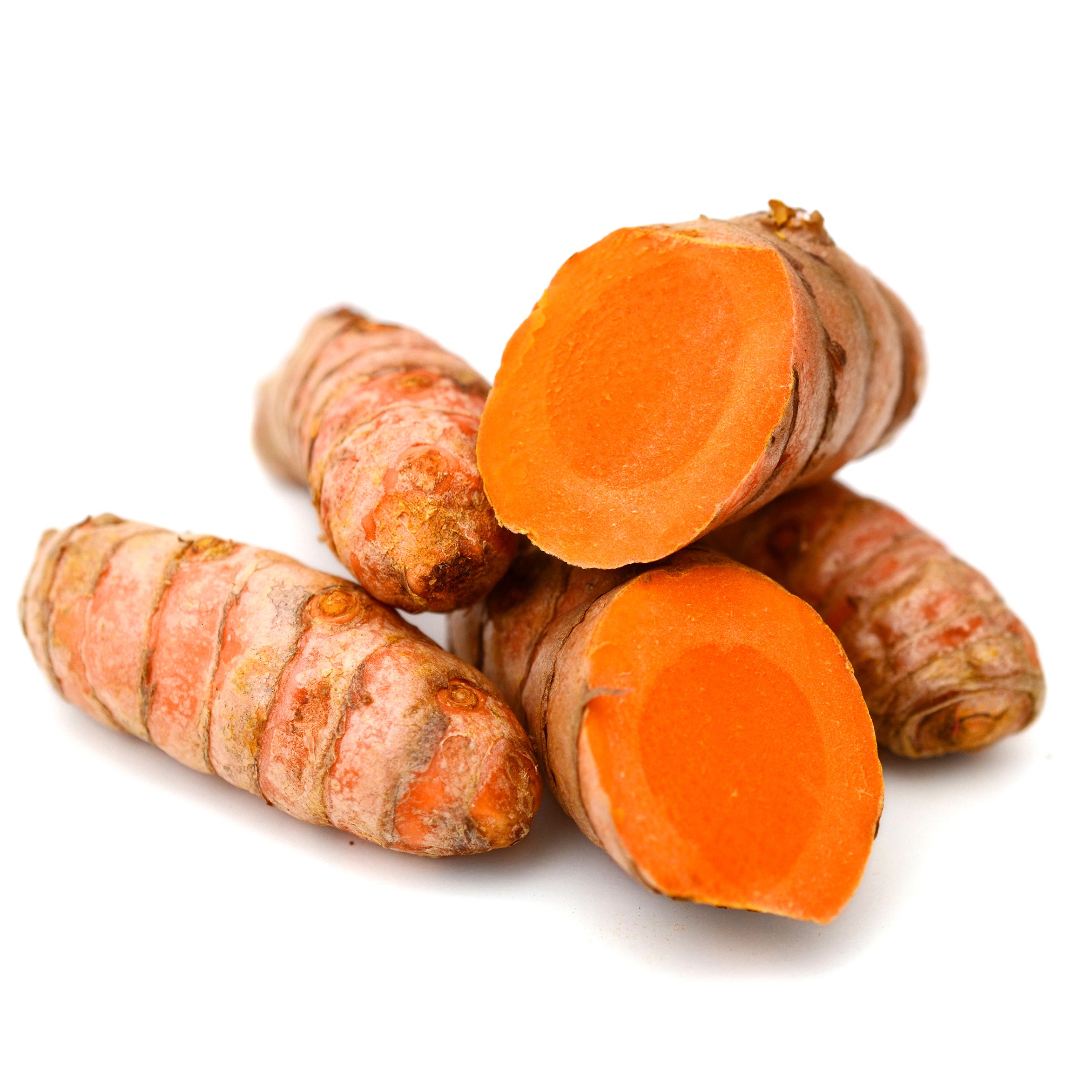
Scientific evidence on curcumin’s role in cancer spans robust preclinical laboratory research, early-phase clinical trials for prevention and treatment, and supportive care for side effects of cancer therapy.
1. Preclinical Evidence and Biological Mechanisms
In cell lines and animal models, curcuminoids demonstrate broad multi-targeted activity across several pathways crucial to cancer development and progression:
Cell Cycle & Proliferation: Downregulates cyclins (cyclin D1, cyclin E) and growth factor signaling pathways (HER-2, EGFR, AP-1).
Apoptosis & Survival: Activates caspases, inhibits antiapoptotic genes, and suppresses PI3K/AKT survival pathways.
Angiogenesis & Metastasis: Inhibits vascular endothelial growth factor (VEGF), CXC-chemokine receptor-4 (CXCR-4), and matrix metalloproteinase-9 (MMP-9).
Inflammation: Suppresses master inflammatory regulators, including nuclear factor-kappa B (NF-κB), cyclooxygenase-2 (COX-2), 5-LOX, TNF-α, and interleukins (IL-1, IL-6, IL-8).
2. Cancer Prevention and Precancerous Lesions
Early-phase clinical trials in humans have explored curcumin for managing high-risk precancerous conditions:
Oral Leukoplakia: A randomized phase IIB trial involving 223 patients showed that 3,600 mg/day of a curcuminoid-enriched preparation for 6 months achieved statistically significant clinical response rates (75 out of 105 patients) compared to placebo (62 out of 108 patients).
Colorectal Precancerous Lesions: High-dose oral curcumin (4,000 mg/day for 30 days) significantly reduced the number of aberrant crypt foci (ACF) by 40%. However, studies on polyps in Familial Adenomatous Polyposis (FAP) yielded mixed results, with pure curcumin showing no significant difference compared to placebo.
Plasma Cell Disorders (MGUS & SMM): In patients with monoclonal gammopathy of undetermined significance (MGUS) or smoldering multiple myeloma (SMM), 4,000-8,000 mg daily reduced the free light-chain ratio (rFLC) and markers of bone resorption.
3. Cancer Treatment (Monotherapy and Chemotherapy Adjunct)
Clinical evidence evaluating curcumin as a primary treatment or combined with standard chemotherapy remains in early pilot stages:
Monotherapy: Small phase II pilot trials in advanced pancreatic cancer patients showed no treatment-related toxicity, but yielded only rare or transient responses (e.g., stable disease in isolated patients).
FOLFOX (Colorectal Cancer): Combining oral curcumin (up to 2,000 mg/day) with FOLFOX chemotherapy (CUFOX) was safe and tolerable and showed a potential survival benefit in small Phase IIa trials, though larger trials are needed.
Gemcitabine (Pancreatic Cancer): Unformulated curcumin at 8,000 mg/day caused significant gastrointestinal toxicity leading to high withdrawal rates. However, bioavailable phytosome formulations combined with gemcitabine were well-tolerated and showed an overall disease control rate of 61.4%.
Docetaxel (Prostate Cancer): A randomized phase II trial combining docetaxel with 6 g/day of curcumin in metastatic castration-resistant prostate cancer showed no significant difference in progression-free survival, overall survival, or PSA response rate compared to docetaxel plus placebo.
4. Supportive Care and Side Effect Management
The strongest human clinical evidence for curcumin lies in ameliorating cancer treatment-related side effects:
Radiation Dermatitis: Topical turmeric creams and oral curcumin reduced skin irritation and radiation dermatitis severity in breast cancer patients undergoing radiotherapy.
Oral Mucositis: Curcumin and turmeric mouthwashes, as well as oral nano-curcumin formulations, significantly delayed the onset and reduced the severity of chemotherapy- and radiation-induced oral mucositis in head and neck cancer patients.
Quality of Life & Inflammation: Bioavailable curcumin formulations improved self-reported quality-of-life scores and systemic oxidative status in patients undergoing chemotherapy and radiation.
5. Current Expert Consensus and Clinical Cautions
Inadequate Clinical Evidence for Primary Therapy: Major regulatory bodies and integrative oncology programs (such as the National Cancer Institute PDQ and Memorial Sloan Kettering Cancer Center) emphasize that current evidence is inadequate to recommend curcumin for treating cancer or as a standard therapeutic adjunct. The FDA has not approved curcumin for cancer treatment.
Drug Interactions: Patients undergoing active chemotherapy should consult their oncologists before taking curcumin supplements. Curcumin may interfere with the effectiveness of certain chemotherapeutic drugs, such as doxorubicin, cyclophosphamide, camptothecin, and mechlorethamine. High supplement doses can also cause liver toxicity, gastrointestinal upset, or increased bleeding risks.
References
Al-Maweri, S. A., Al-Qadhi, G., Alqutaibi, A. Y., Sallam, N. M., Assad, M., Abdulghani, M. A., & Mohammed, M. M. A. (2025). Curcumin versus corticosteroids for symptomatic oral lichen planus: A systematic review and meta-analysis. Clinical and Experimental Dental Research, 11(5), Article e70227. (Source:
Clinical Exp Dental Res - 2025 - Al‐Maweri - Curcumin Versus Corticosteroids for Symptomatic Oral Lichen Planus A.pdf)Cleveland Clinic Health Essentials. (2022). 6 health benefits of turmeric. (Source:
Turmeric Health Benefits and Side Effects.pdf)Hewlings, S. J., & Kalman, D. S. (2017). Curcumin: A review of its effects on human health. Foods, 6(10), Article 92. (Sources:
foods-06-00092.pdf&foods-06-00092-v3.pdf)Johns Hopkins Medicine. (2026). Turmeric benefits. Johns Hopkins Health Library. (Source:
Turmeric Benefits _ Johns Hopkins Medicine.pdf)Kou, H., Huang, L., Jin, M., He, Q., Zhang, R., & Ma, J. (2023). Effect of curcumin on rheumatoid arthritis: A systematic review and meta-analysis. Frontiers in Immunology, 14, Article 1121655. (Source:
fimmu-14-1121655.pdf)Liu, X., Lin, L., & Hu, G. (2024). Meta-analysis of the effect of curcumin supplementation on skeletal muscle damage status. PLoS ONE, 19(7), Article e0299135. (Source:
journal.pone.0299135.pdf)Memorial Sloan Kettering Cancer Center. (2026). The truth about turmeric and cancer. (Source:
The Truth About Turmeric and Cancer _ Memorial Sloan Kettering Cancer Center.pdf)Mokgalaboni, K., Mashaba, R. G., Phoswa, W. N., & Lebelo, S. L. (2024). Curcumin attenuates hyperglycemia and inflammation in type 2 diabetes mellitus: Quantitative analysis of randomized controlled trial. Nutrients, 16(23), Article 4177. (Source:
nutrients-16-04177-v4.pdf)National Cancer Institute. (2023). PDQ® curcumin (Curcuma, turmeric) and cancer. National Institutes of Health, U.S. Department of Health and Human Services. (Source:
Curcumin (Curcuma, Turmeric) and Cancer.pdf)Restivo, J. (2024). Turmeric benefits: A look at the evidence (T. Fung, Ed.). Harvard Health Publishing, Harvard Medical School. (Source:
Turmeric benefits_ A look at the evidence - Harvard Health.pdf)Różański, G., Tabisz, H., Zalewska, M., Niemiro, W., Kujawski, S., Newton, J., Zalewski, P., & Słomko, J. (2023). Meta-analysis of exploring the effect of curcumin supplementation with or without other advice on biochemical and anthropometric parameters in patients with metabolic-associated fatty liver disease (MAFLD). International Journal of Environmental Research and Public Health, 20(5), Article 4266. (Source:
ijerph-20-04266-v3.pdf)Shen, W., Qu, Y., Jiang, H., Wang, H., Pan, Y., Zhang, Y., Wu, X., Han, Y., & Zhang, Y. (2022). Therapeutic effect and safety of curcumin in women with PCOS: A systematic review and meta-analysis. Frontiers in Endocrinology, 13, Article 1051111. (Source:
fendo-13-1051111.pdf)Zeng, L., Yang, T., Yang, K., Yu, G., Li, J., Xiang, W., & Chen, H. (2022). Curcumin and Curcuma longa extract in the treatment of 10 types of autoimmune diseases: A systematic review and meta-analysis of 31 randomized controlled trials. Frontiers in Immunology, 13, Article 896476. (Source:
fimmu-13-896476.pdf)Zeng, L., Yu, G., Hao, W., Yang, K., & Chen, H. (2021). The efficacy and safety of Curcuma longa extract and curcumin supplements on osteoarthritis: A systematic review and meta-analysis. Bioscience Reports, 41(6), Article BSR20210817. https://doi.org/10.1042/BSR20210817 (Source:
bsr-2021-0817.pdf)Zhao, J., Liang, G., Zhou, G., Hong, K., Yang, W., Liu, J., & Zeng, L. (2024). Efficacy and safety of curcumin therapy for knee osteoarthritis: A Bayesian network meta-analysis. Journal of Ethnopharmacology, 321, Article 117493. (Source:
1-s2.0-S0378874123013636-main.pdf)