
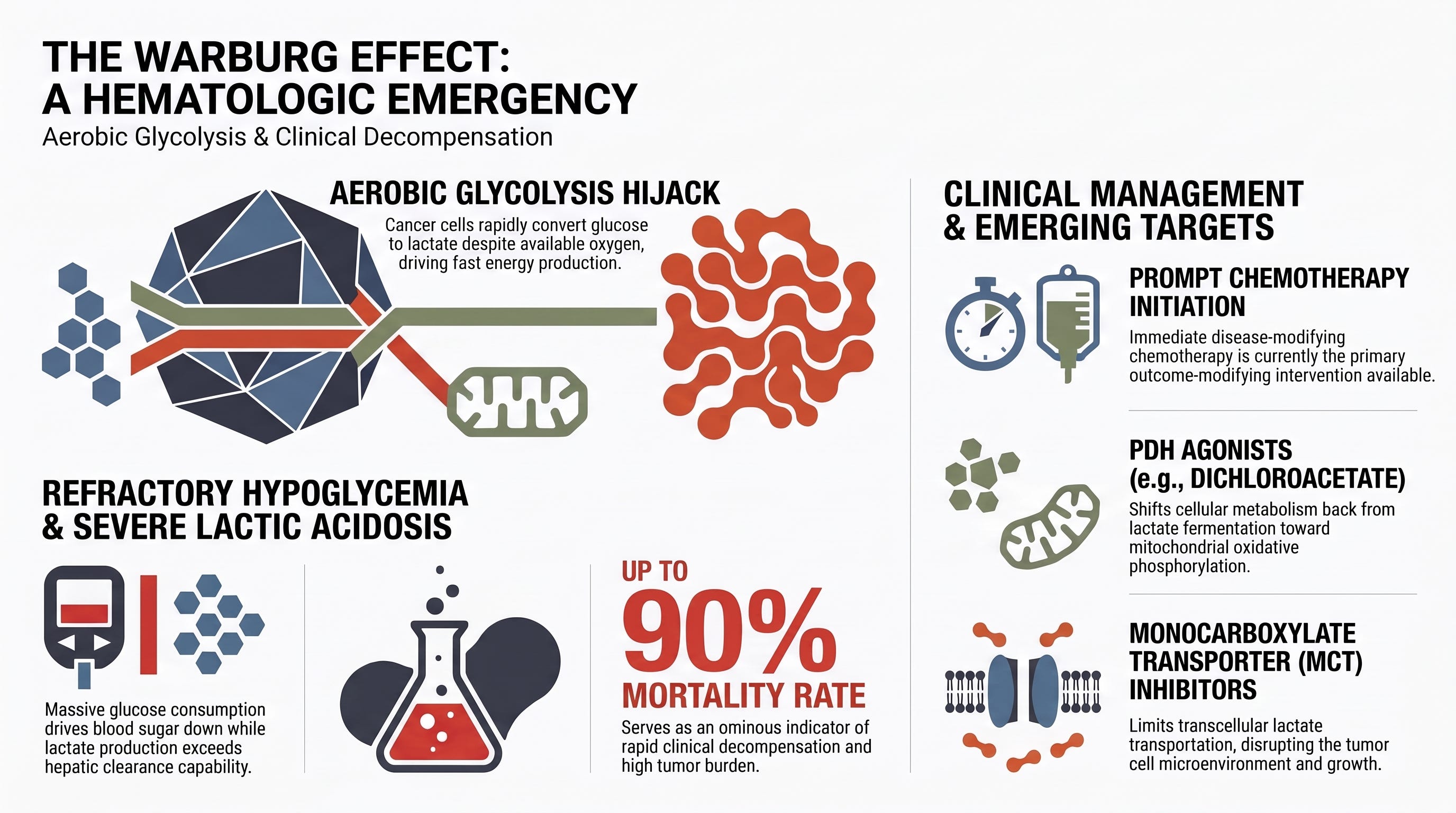
A severe oncological emergency known as the Warburg effect occurs when rapidly proliferating cancer cells fundamentally alter their energy metabolism by converting glucose into lactate rather than relying on standard oxygen-based respiration. This metabolic shift is illustrated through the tragic case of a 39-year-old female patient with T-cell lymphoma who suffered from life-threatening type B lactic acidosis and refractory hypoglycemia that failed to respond to conventional treatments and ultimately resulted in her passing. Ultimately, the text aims to highlight how this phenomenon serves as an ominous warning sign of clinical deterioration and an exceptionally high tumor burden, emphasizing that early recognition and prompt chemotherapy administration are vital for altering patient outcomes and developing innovative cancer therapies.
1. Core Metabolic Mechanism
Aerobic Glycolysis: Normal cells rely on mitochondrial oxidative phosphorylation under normoxic conditions. Cancer cells rewire their energy metabolism to bypass the tricarboxylic acid (TCA) cycle, converting pyruvate directly into lactate.
Speed vs. Yield: Although lactate fermentation yields less ATP per glucose molecule than mitochondrial respiration, it generates ATP much faster. This rapid energy production gives proliferating tumor cells a selective growth advantage.
Oncogenic Role of Lactate: Beyond being a metabolic byproduct, accumulating lactate acts as a potent signaling molecule that promotes tumor angiogenesis, cell migration, and immune evasion within the tumor microenvironment.
2. Clinical Manifestations (”Clinical Warburg Effect”)
When triggered by aggressive hematologic malignancies (such as T-cell lymphoma or leukemias) or high-burden solid tumors, the Warburg effect can precipitate a life-threatening hematologic emergency with mortality rates reaching up to 90%:
Severe Type B Lactic Acidosis: Driven by excessive tumor glycolysis generating lactic acid at rates that overwhelm hepatic clearance capacity. Unlike Type A lactic acidosis, Type B occurs without systemic tissue hypoperfusion or shock.
Refractory Hypoglycemia: Tumor cells consume massive quantities of circulating glucose, causing severe, recurrent drops in blood sugar that persist despite continuous high-concentration glucose infusions (e.g., dextrose 10% or 20%) and repeated intravenous dextrose pushes.
3. Therapeutic Strategies and Novel Targets
Disease-Modifying Chemotherapy: Prompt initiation of systemic chemotherapy is currently the only definitive outcome-modifying intervention, as lowering tumor burden addresses the underlying metabolic hijack. Supportive measures like sodium bicarbonate, hemodialysis, or thiamine replacement lack high-quality evidence as standalone cures.
Pyruvate Dehydrogenase (PDH) Agonists: Small molecules like dichloroacetate (DCA) stimulate PDH, forcing tumor energy metabolism away from lactate fermentation and back into the mitochondrial TCA cycle to inhibit tumor cell growth.
Monocarboxylate Transporter (MCT) Inhibitors: Agents that block MCTs prevent transcellular lactate shuttling, disrupting the tumorigenic microenvironment.
Source Listing Summary
Article Title: Cancer’s Metabolic Hijack: The Under-Recognized Hematologic Emergency Related to the Warburg Effect
Authors & Affiliations: Weiying Li, MD; Seema Jaga, MD; Shuva Shah, MD; Martin Cearras, MD (Department of Internal Medicine & Department of Critical Care Medicine, AdventHealth Orlando).
Journal & Identifier: Cureus Journal of Medical Science (Springer Nature), Published January 23, 2025. Volume 17, Issue 1, Article e77869. DOI: 10.7759/cureus.77869 (Open Access, CC-BY 4.0).