
Executive Summary
This briefing outlines findings from research investigating the anticancer potential of Fenbendazole (FZ), a benzimidazole anthelmintic drug, for treating Epithelial Ovarian Cancer (EOC). While natural FZ shows significant anti-proliferative effects in vitro, its clinical utility has historically been limited by poor water solubility and low bioavailability.
To overcome these barriers, researchers developed FZ-encapsulated poly(D,L-lactide-co-glycolide) acid (PLGA) nanoparticles (FZ-PLGA-NPs). The study concludes that this water-soluble nanoparticle formulation delivers FZ systemically and significantly inhibits tumor growth in both cell line xenografts and patient-derived xenograft (PDX) mouse models. The primary mechanism of action is inhibition of the PI3K/mTOR signaling pathway, leading to decreased cell proliferation and increased apoptosis. These results provide scientific evidence supporting the potential for FZ-PLGA-NPs in future clinical trials for ovarian cancer.
1. Background and Clinical Context
The Challenge of Epithelial Ovarian Cancer (EOC)
Mortality: EOC is the leading cause of mortality among gynecologic malignancies.
Survival Rates: Despite advances in primary cytoreductive surgery and platinum-based chemotherapy, patients with advanced EOC face a five-year survival rate of only 40%.
Relapse: Most patients with advanced disease experience relapse, creating an urgent unmet need for new therapeutic agents.
Drug Repurposing: Fenbendazole (FZ)
Drug repurposing offers a cost-effective, time-efficient route to identifying new anticancer treatments. FZ, traditionally used to treat gastrointestinal parasites, has emerged as a candidate due to:
Mechanism: Disruption of microtubule polymerization, G2/M phase cell cycle arrest, and anti-angiogenesis.
Efficacy in Resistance: Previous reports indicate that benzimidazole anthelmintics may be effective against paclitaxel- and doxorubicin-resistant cancer cells.
2. Technical Development of FZ-PLGA-NPs
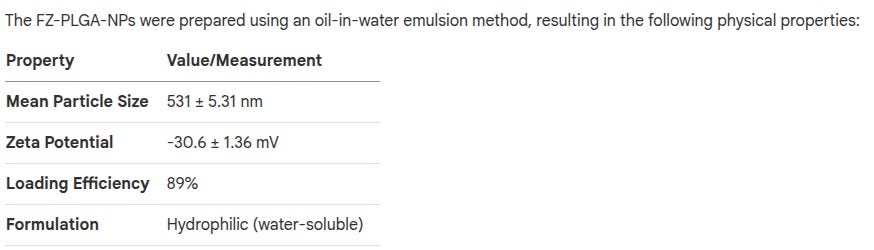
The major obstacle to FZ’s clinical application is its hydrophobicity. The research utilized PLGA—a biocompatible, biodegradable, and low-toxicity polymer—to create a water-soluble delivery system.
Nanoparticle Characteristics
3. Analysis of Anti-Cancer Efficacy
In Vitro Findings (Cell Lines)
The study tested various EOC cell lines, including chemosensitive (A2780, HeyA8, SKOV3ip1) and chemoresistant (A2780-CP20, HeyA8-MDR, SKOV3-TR) strains.
Cell Proliferation: Both natural FZ and FZ-PLGA-NPs significantly decreased cell viability in a dose- and time-dependent manner.
Sensitivity: HeyA8 and HeyA8-MDR showed the highest sensitivity to the nanoparticle formulation.
Apoptosis: FACS analysis confirmed a significant increase in the proportion of apoptotic cells 48 hours after treatment with FZ-PLGA-NPs across all tested lines.
In Vivo Findings (Animal Models)
The research highlighted a critical discrepancy between natural FZ and the nanoparticle formulation in live models:
Failure of Natural FZ:
Oral Administration: Doses of 1 mg and 10 mg failed to reduce tumor weight. This is attributed to extensive first-pass metabolism and low systemic bioavailability.
Intraperitoneal (IP) Administration: FZ failed to be absorbed and instead aggregated in the IP cavity.
Success of FZ-PLGA-NPs:
Tumor Reduction: Intravenous injection of FZ-PLGA-NPs significantly inhibited tumor growth in HeyA8, HeyA8-MDR, and PDX models.
Markers: Harvested tumor tissues showed a significant decrease in Ki-67 (a proliferation marker) and an increase in TUNEL-positive cells (an apoptosis marker).
Safety Profile: No significant differences in total body weight were observed between treatment and control groups, suggesting low systemic toxicity.
4. Therapeutic Mechanism of Action
The study identified the PI3K/mTOR pathway as the central target for FZ’s anti-cancer effects in EOC cells. This pathway critically regulates cell survival and growth.
Key Molecular Changes observed via Western Blot: Following treatment with FZ-PLGA-NPs, there was a significant decrease in the phosphorylation of several downstream proteins:
p-mTOR
p-AKT
p-ERK
p-S6K1
Reducing these activated proteins effectively inhibits the signaling required for tumor cell survival and proliferation.
5. Conclusions and Implications
Strategic Takeaways
Overcoming Solubility: The research shows that PLGA nanoparticles can bypass FZ's inherent water insolubility, enabling effective systemic delivery.
Evidence Against Self-Medication: The study notes that online claims of FZ “cures” have led patients to self-administer the drug. However, these results prove that the natural form of FZ has no anti-cancer effect in vivo; only the water-soluble nanoparticle form was effective.
Chemoresistance: FZ-PLGA-NPs demonstrated efficacy in paclitaxel-resistant models (HeyA8-MDR), suggesting a potential role in treating refractory ovarian cancer.
Future Directions
Pharmacokinetics: A noted limitation is the lack of pharmacokinetic evaluation. Because nanoparticle delivery may alter FZ distribution, further study is needed for human application.
Targeting Ligands: The research suggests that attaching targeting ligands to the PLGA nanoparticles could further enhance their specificity and anti-cancer effects in chemoresistant EOC.
Clinical Trials: The strong results in PDX models—which closely mimic human tumor environments—warrant moving FZ-PLGA-NPs into clinical trials.