
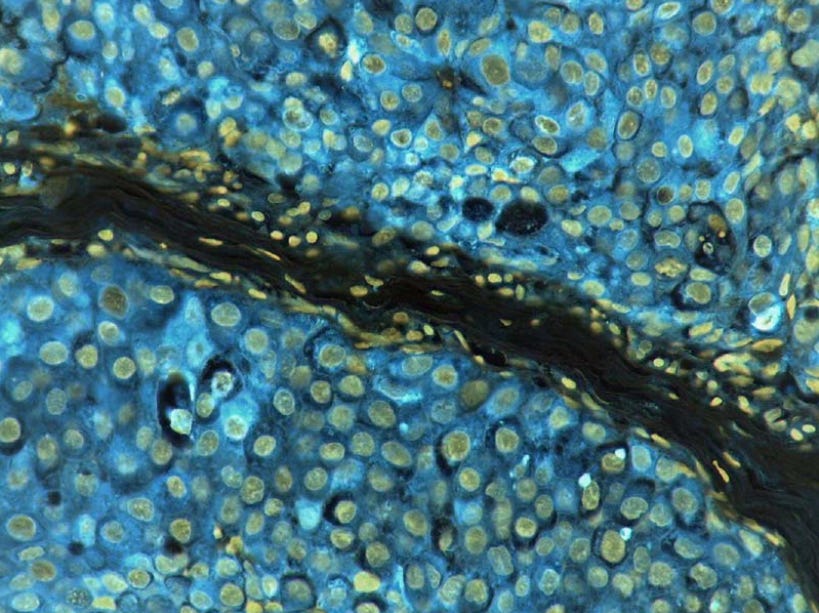
While fenbendazole (FBZ) and mebendazole (MBZ) belong to the same benzimidazole class of anthelmintics and share core anti-cancer mechanisms, they differ significantly in regulatory status, human pharmacokinetic data, preclinical potency, and clinical evidence.
1. Regulatory & Approval Status
Mebendazole: Approved by the FDA for human use since the 1970s to treat intestinal parasite infections. Because of its long track record in humans, it has been formally incorporated into human oncology clinical trials.
Fenbendazole: Formulated and approved exclusively for veterinary use in animals (such as dogs, livestock, and fish). It is not approved by the FDA or EMA for human administration. Human use is largely restricted to off-label self-administration driven by online testimonials and case reports.
2. Preclinical Antitumor Potency
In direct head-to-head laboratory screenings across various cancer cell lines, mebendazole generally demonstrates higher potency (lower IC50 values) than fenbendazole:
Melanoma: In screening assays, mebendazole achieved IC50 values of 0.30–0.32 µM compared to 1.2–1.4 µM for fenbendazole, making mebendazole 3- to 4-fold more potent against melanoma cells.
Glioma / Brain Cancer: In canine glioma cell lines, mebendazole exhibited IC50 values of 0.03–0.08 µM, whereas fenbendazole required 0.55–1.53 µM (a 10- to 20-fold difference in potency).
Colorectal Cancer: In large drug screening libraries against colon cancer lines, mebendazole emerged as a top candidate among the benzimidazole cluster.
3. Pharmacokinetics, Bioavailability, and Brain Penetration
Solubility Challenges: Both drugs suffer from poor water solubility and low gastrointestinal absorption in humans.
Polymorphic Forms: Mebendazole’s pharmacokinetics are well-characterized into three distinct crystal polymorphs (A, B, and C). Polymorph C exhibits superior gut absorption and effectively crosses the blood-brain barrier (BBB), making it the preferred form for brain tumors like glioblastoma and medulloblastoma.
Fenbendazole Absorption: Fenbendazole has an extremely low aqueous solubility of approximately 0.3 µg/mL and lacks human polymorphic characterization. Unformulated oral fenbendazole struggles to reach systemic therapeutic concentrations in solid tumors unless delivered via specialized carrier systems, such as PLGA nanoparticles or lipid vehicles.
4. Shared vs. Distinct Mechanisms of Action
Shared Mechanisms: Both drugs bind to the colchicine-binding domain of β-tubulin, preventing microtubule polymerization, causing G2/M cell cycle arrest, inhibiting angiogenesis, and blocking glucose uptake (GLUT transporters and Hexokinase 2) to starve cancer cells.
Mebendazole Specifics: MBZ acts as a multi-kinase inhibitor, targeting VEGFR2, BRAF, and ERK signaling pathways, while also inhibiting the Hedgehog pathway and promoting tumor-suppressive M1 macrophage polarization.
Fenbendazole Specifics: FBZ is particularly noted for inducing p53-dependent GSDME pyroptosis (in breast cancer), ferroptosis (in 5-FU-resistant colorectal cancer), and proteasomal stress.
5. Human Clinical Evidence & Safety Profiles
Mebendazole: Supported by Phase 1 and Phase 2 clinical trials in patients with high-grade gliomas, pediatric brain tumors, and metastatic colorectal cancer. High-dose, long-term human safety data (derived from treating echinococcosis) shows it is generally well-tolerated, with main risks being transient liver enzyme elevations, neutropenia, and gastrointestinal upset.
Fenbendazole: Lacks formal human clinical trials. Human data consists of retrospective case reports and observational surveys. Self-administration presents significant risks of drug-induced liver injury (DILI) and dangerous cytochrome P450 (CYP3A4, CYP2C19, CYP2J2) interactions with concurrent chemotherapy.
Dogra, N., Kumar, A., & Mukhopadhyay, T. (2018). Fenbendazole acts as a moderate microtubule destabilizing agent and causes cancer cell death by modulating multiple cellular pathways. Scientific Reports, 8, Article 11926. https://doi.org/10.1038/s41598-018-30158-6