
The in vivo mouse studies evaluate the antitumor, anti-metastatic, and signaling effects of ivermectin, as well as other repurposed anthelmintics like mebendazole, across both non-small cell lung cancer (NSCLC) and related tumor models. This article discusses in vitro and in vivo preclinical testing (lab & animal).
1. Ivermectin In Vivo Mouse Studies
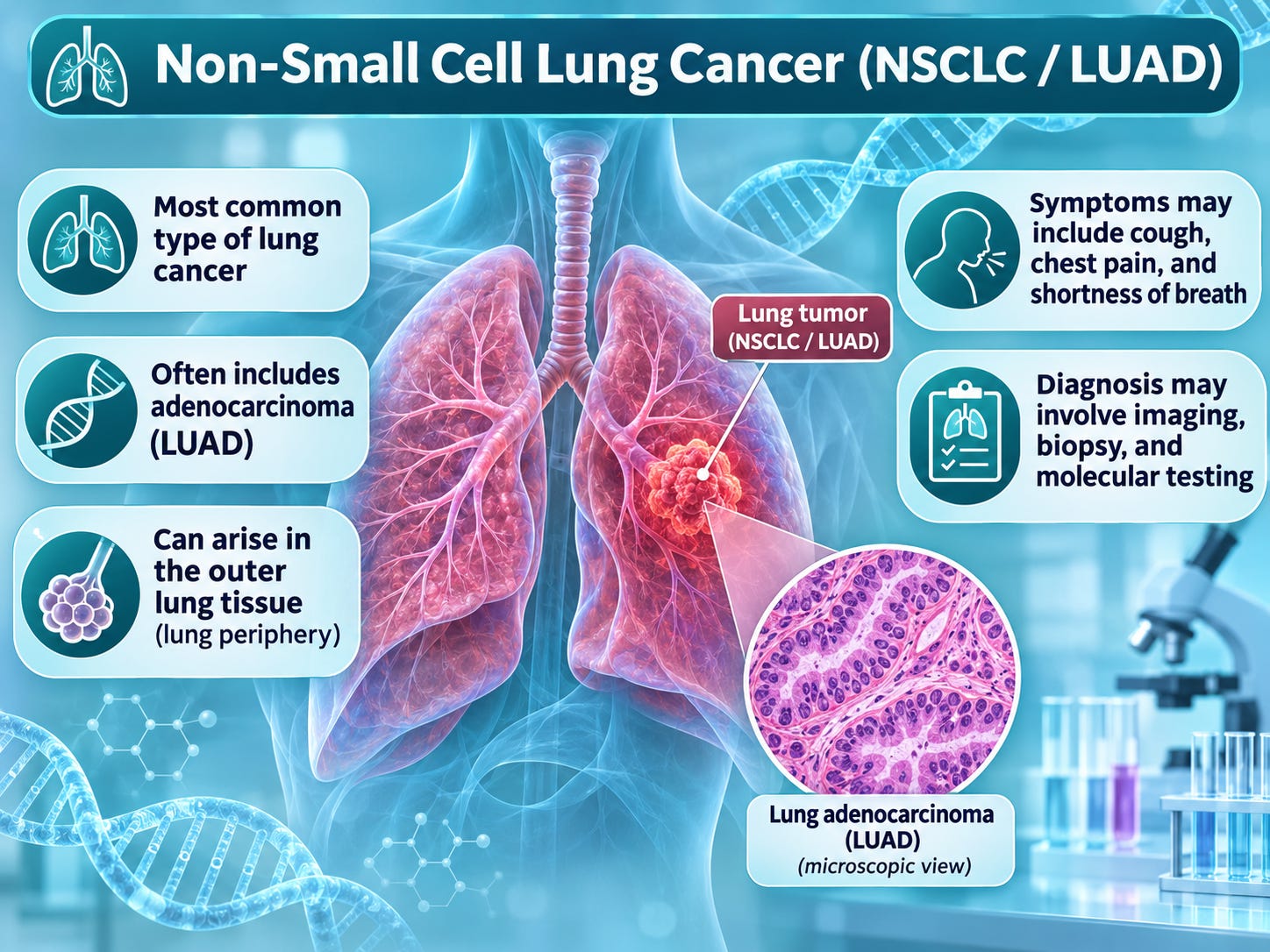
Non-Small Cell Lung Cancer (NSCLC / LUAD)
Suppression of Lung Adenocarcinoma Xenograft Growth: In nude mice bearing subcutaneous human lung adenocarcinoma (LUAD) xenografts, ivermectin treatment significantly inhibited tumor volume and cellular growth. Mechanistically, this corroborated in vitro findings demonstrating that ivermectin downregulates PAK1 protein expression, inducing apoptosis and nonprotective autophagy.
Urethane-Induced Lung Tumorigenesis in BALB/c Mice: In a chemical carcinogen (urethane)-induced NSCLC mouse model, ivermectin significantly suppressed tumor development by shutting down the EGFR/PI3K/Akt/mTOR pro-survival and angiogenic cascade. It markedly reduced phosphorylated PI3K, Akt, mTOR, and VEGF expression, lowered the proliferation marker Ki-67, and elevated pro-apoptotic markers (increasing the Bax/Bcl-2 ratio and caspase-3 activation).
Other Solid Tumor Models
Triple-Negative Breast Cancer (4T1 Syngeneic Model): Oral ivermectin (5 mg/kg daily) administered with an anti–PD-1 immune checkpoint inhibitor converted immunologically “cold” tumors into “hot” tumors by triggering immunogenic cell death and stimulating CD8+ T-cell infiltration, producing synergistic tumor regression and extending mouse survival.
Cisplatin Synergism in Ovarian Cancer (PA-1 Xenografts in NOD/SCID Mice): Intraperitoneal ivermectin (1–3 mg/kg) enhanced cisplatin efficacy, suppressing Akt/mTOR signaling and producing robust tumor growth inhibition without overt host toxicity.
Metastatic Colon & Breast Cancer Models (NOD/SCID Mice): Ivermectin (0–3 mg/kg/day) inhibited tumor cell invasion and reduced distant metastatic nodules by suppressing the Wnt/β-catenin/Integrin β1/FAK signaling axis.
Melanoma Lung Colonization (B16F10 Model): Oral ivermectin (10 mg/kg daily) suppressed lung metastasis formation by impeding neutrophil extracellular trap (NET) formation and reducing immunosuppressive myeloid-derived suppressor cells (MDSCs).
Gastric Cancer (INS-GAS Mice): Intraperitoneal ivermectin (10 mg/kg) caused G1/S-phase arrest and reduced gastric tumor volume via Wnt/β-catenin pathway inactivation.
2. Mebendazole (MBZ) In Vivo Mouse Studies
Because the sources also extensively examine mebendazole across NSCLC and metastatic models, several dedicated mouse studies show complementary findings:
NSCLC & Lung Metastasis Models
Tumor Growth and Lung Colony Reduction: In early subcutaneous H460 NSCLC xenograft models, oral mebendazole (0.4–1.0 mg/mouse every other day) caused dose-dependent tumor suppression, reaching an ~80% reduction or near-complete arrest of tumor growth. In A549 tail-vein injection models, mebendazole reduced lung metastatic colony formation by ~80% and inhibited neovascularization without evident systemic toxicity.
ROS/STAT3 Inhibition in A549 Xenografts: Oral mebendazole (50 mg/kg every other day) significantly reduced tumor volume and excised tumor weight in BALB/c nude mice bearing A549 xenografts by elevating reactive oxygen species (ROS) and downregulating JAK2/STAT3 signaling, with mice maintaining stable body weight.
Overcoming EGFR-TKI Resistance in HCC827 GR5 Xenografts: In BALB/c mice implanted with gefitinib-resistant NSCLC cells (HCC827 GR5), combining mebendazole (10 mg/kg) with gefitinib (50 mg/kg) suppressed tumor growth significantly more than monotherapy, prolonging relative tumor volume doubling time from 6.2 days (controls) to 25 days and inducing severe replication-associated DNA stress.
PELI3/TRADD Axis Modulation: In subcutaneous H460 models and tail-vein A549 metastasis models, mebendazole inhibited primary tumor progression and blocked lung metastasis formation by altering the PELI3/TRADD ubiquitin-signaling complex.
Metastatic Triple-Negative Breast Cancer (TNBC)
Distant Organ Metastasis Elimination: In orthotopic MDA-MB-231 xenografts in NSG mice, mebendazole (administered via high-fat diet feed at 215 ppm or sesame-oil gavage at 30 mg/kg) decreased primary tumor weight by 35–55%, reduced lung metastatic burden by 60–72%, and eliminated liver metastases. In a patient-derived xenograft (HCI-001 PDX) model, mebendazole produced a twofold reduction in histological lung metastatic nodules.
Syngeneic 4T1 Model: In immunocompetent BALB/c mice, mebendazole reduced primary tumor weight by 2.6-fold, lowered lung bioluminescent metastasis by 6.5-fold, and abolished detectable liver metastasis.
Depletion of Cancer Stem Cells (CSCs): Serial in vivo limiting dilution assays showed that mebendazole-treated tumors had a 4-fold lower tumor-initiating cell (TIC) frequency (1/188,578 vs. 1/45,059) and decreased ITGβ4 stemness marker expression.
Syngeneic Brain Tumors & Immune Microenvironment
Pediatric and Juvenile High-Grade Glioma: In juvenile mice orthotopically implanted with VM-M3 or CT-2A glioma cells, mebendazole (100 mg/kg administered within a ketogenic diet) significantly diminished intracranial bioluminescence, blocked invasive CSF spread into the spinal cord, reduced Ki-67 proliferation, and substantially improved survival, with MALDI mass spectrometry confirming drug penetration into brain tissue.
Macrophage Polarization in Colorectal Cancer (CT26 Model): In BALB/c mice bearing CT26 tumors, high-dose mebendazole (50 mg/kg) inhibited tumor growth, extended survival, and shifted tumor-associated macrophages from the pro-tumor M2 phenotype to the antitumoral M1 phenotype.
Key Takeaways from the Animal Data
Target Validation Beyond Cell Culture: Both ivermectin and mebendazole show that their primary target inhibitions (PAK1/mTOR for ivermectin; tubulin/STAT3/EGFR for mebendazole) translate into measurable reductions in tumor growth in vivo.
Potency Against Metastatic Seeding: Both agents exhibit strong anti-metastatic efficacy in mice, significantly suppressing lung nodules and distant organ dissemination.
Synergy with Chemotherapy, TKIs, and Immunotherapy: When paired with cytotoxic chemotherapy (cisplatin/paclitaxel), EGFR-TKIs (gefitinib), or anti–PD-1 antibodies, these agents overcome resistance mechanisms and improve animal survival without causing substantial weight loss or systemic toxicity.
Sources
1. Ivermectin In Vivo Mouse Studies
Li, M.-Y., Zhang, J., Lu, X., Zhou, D., Deng, X.-F., Liu, Q.-X., Dai, J.-G., & Zheng, H. (2024). Ivermectin induces nonprotective autophagy by downregulating PAK1 and apoptosis in lung adenocarcinoma cells. Cancer Chemotherapy and Pharmacology, 93(1), 41–54. https://doi.org/10.1007/s00280-023-04589-6
(Investigated human lung adenocarcinoma xenograft tumor growth suppression in nude mice via PAK1 downregulation).Malak, M. N., Arafa, E. A., Abdel-Fattah, M. M., & Hamzawy, M. A. (2025). Targeting EGFR/PI3K/AKT/mTOR and Bax/Bcl-2/caspase3 pathways with ivermectin mediates its anticancer effects against urethane-induced non-small cell lung cancer in BALB/c mice. Tissue and Cell, 94, Article 102873. https://doi.org/10.1016/j.tice.2025.102873
(Investigated chemical carcinogen urethane–induced NSCLC models, EGFR/PI3K/Akt/mTOR inhibition, and apoptosis induction in BALB/c mice).Al-Zoubi, R. M., Farhan, A., Hanbali, B., Al-Zoubi, S. R., Khan, A., Shkoor, M., Bani-Yaseen, A. D., Al Zoubi, M. S., & Agouni, A. (2026). Antiparasitic agents in oncology: Innovative mechanisms, emerging evidence and clinical potential in cancer treatment. European Journal of Medicinal Chemistry, 316, Article 118987. https://doi.org/10.1016/j.ejmech.2026.118987
(Comprehensive oncology review covering in vivo solid tumor models, including 4T1 syngeneic breast cancer with anti–PD-1, PA-1 ovarian cancer xenografts, B16F10 melanoma lung colonization, and INS-GAS gastric cancer).
2. Mebendazole In Vivo Non-Small Cell Lung Cancer (NSCLC) Studies
El-Tanani, M., Satyam, S. M., Prabhakar, S., El-Tanani, Y., Safaii, E., Rabbani, S. A., & Sutherland, M. (2026). Dual targeting of EGFR signaling and microtubule dynamics enhances replication-associated cellular stress and suppresses tumor growth in gefitinib-resistant non-small cell lung cancer. PLOS ONE, 21(10), Article e0360164. https://doi.org/10.1371/journal.pone.0360164
(Investigated in vivo tumor growth delay and replication stress induction in gefitinib-resistant HCC827 GR5 xenograft models).Li, F., Li, X., Li, H., Li, S., Liu, Y., Bai, X., Qi, T., Zhao, X., & He, Y. (2026). Mebendazole inhibits PELI3-mediated ubiquitination of TRADD in non-small cell lung cancer cells. Frontiers in Oncology, 15, Article 1728170. https://doi.org/10.3389/fonc.2025.1728170
(Evaluated in vivo subcutaneous H460 tumor inhibition and A549 tail-vein lung metastasis models via the PELI3/TRADD axis).Liang, Z., Chen, Q., Pan, L., She, X., & Chen, T. (2024). Mebendazole induces apoptosis and inhibits migration via the reactive oxygen species-mediated STAT3 signaling downregulation in non-small cell lung cancer. Journal of Thoracic Disease, 16(2), 1412–1423. https://doi.org/10.21037/jtd-23-1978
(Investigated A549 lung adenocarcinoma subcutaneous xenografts in BALB/c nude mice).Mukhopadhyay, T., Sasaki, J.-I., Ramesh, R., & Roth, J. A. (2002). Mebendazole elicits a potent antitumor effect on human cancer cell lines both in vitro and in vivo. Clinical Cancer Research, 8(9), 2963–2969.
(Demonstrated oral mebendazole efficacy in H460 subcutaneous xenografts and inhibition of A549 lung metastatic colonies).Sasaki, J.-I., Ramesh, R., Chada, S., Gomyo, Y., Roth, J. A., & Mukhopadhyay, T. (2002). The anthelmintic drug mebendazole induces mitotic arrest and apoptosis by depolymerizing tubulin in non-small cell lung cancer cells. Molecular Cancer Therapeutics, 1(13), 1201–1209.
(Pioneering in vivo proof-of-concept for tubulin depolymerization and mitotic arrest in NSCLC xenografts).
3. Mebendazole In Vivo Metastasis, Brain, and Microenvironment Studies
Joe, N. S., Godet, I., Milki, N., Ain, N. U. I., Oza, H. H., Riggins, G. J., & Gilkes, D. M. (2022). Mebendazole prevents distant organ metastases in part by decreasing ITGβ4 expression and cancer stemness. Breast Cancer Research, 24(1), Article 98. https://doi.org/10.1186/s13058-022-01591-3
(Evaluated orthotopic MDA-MB-231, HCI-001 PDX, and syngeneic 4T1 models demonstrating elimination of liver metastases and reduction of lung metastatic burden).Mansoori, S., Blom, K., Andersson, C., Fryknäs, M., Larsson, R., & Nygren, P. (2026). Characterization of the anticancer effect of mebendazole and its interaction with standard cytotoxic drugs in patient tumor cells ex vivo and in an in vivo mouse model. Oncology Reports, 55(1), Article 9. https://doi.org/10.3892/or.2025.9014
(Investigated subcutaneous CT26 colon adenocarcinoma in BALB/c mice, survival extension, and M2-to-M1 macrophage polarization).Mukherjee, P., Maurer, J., Stopka, S. A., Greenwood, B., Aristizabal-Henao, J. J., Karmacharya, S., Chimento, A., Ta, N., Lee, D. C., Duraj, T., Bronson, R. T., Kiebish, M. A., & Seyfried, T. N. (2026). Ketogenic diet as a metabolic vehicle enhancing the therapeutic efficacy of mebendazole and devimistat in juvenile syngeneic high-grade glioma. Cell Reports Medicine, 7(6), Article 102845. https://doi.org/10.1016/j.xcrm.2026.102845
(Evaluated orthotopic VM-M3 and CT-2A glioma in juvenile mice with MALDI-MS drug biodistribution and survival analysis).