
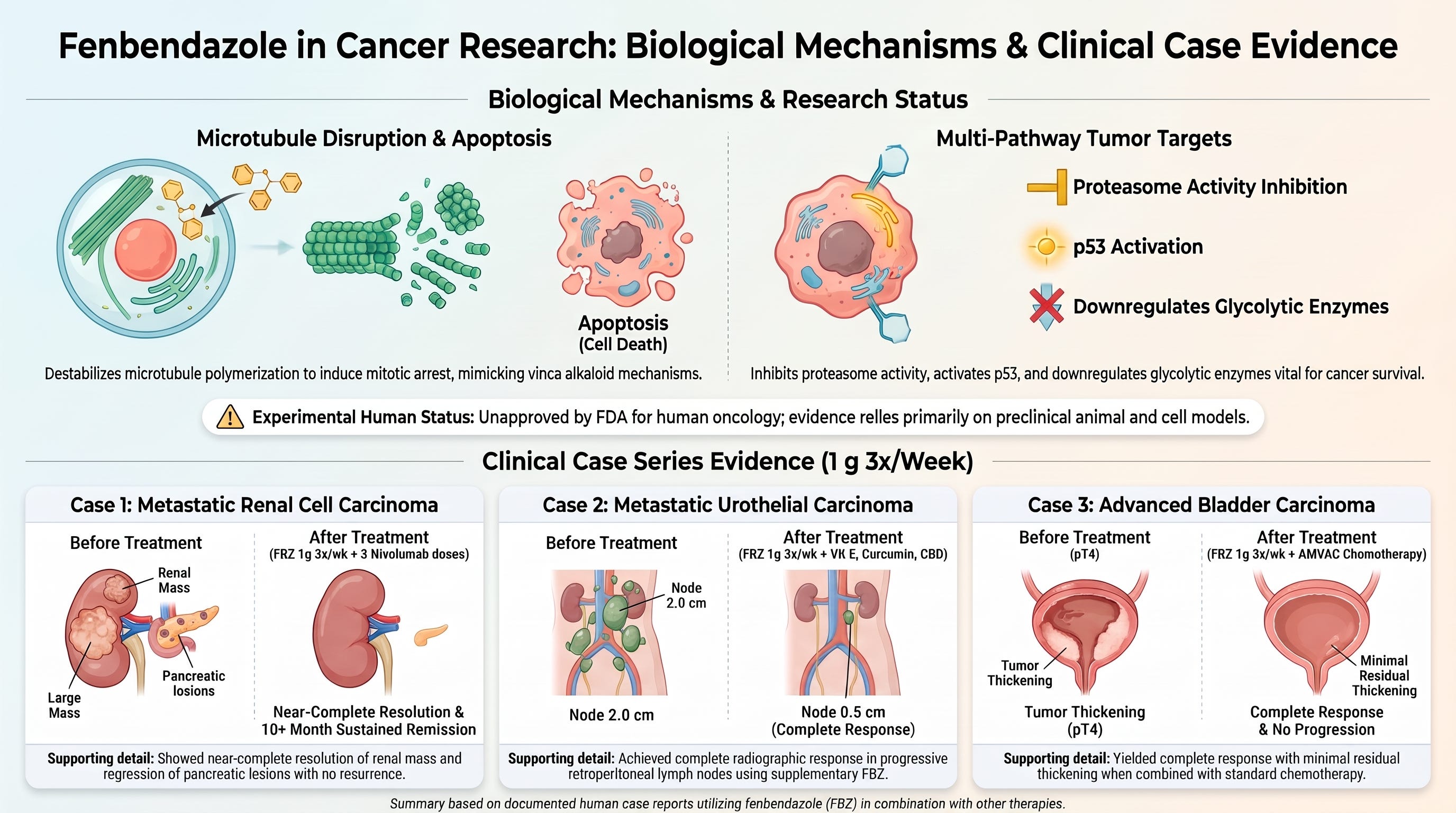
1. Introduction: The Unlikely Candidate in Modern Oncology
Pancreatic cancer and metastatic genitourinary malignancies represent some of the most daunting challenges in modern medicine. Known for late-stage diagnoses, rapid progression, and sobering survival rates, these aggressive cancers often leave patients with limited therapeutic options. Standard clinical protocols—ranging from surgical resection and radiation therapy to cytotoxic chemotherapy (such as gemcitabine and nab-paclitaxel) and targeted immunotherapies—do not always halt disease progression. Driven by these high stakes, researchers and patients alike are turning toward non-traditional avenues to discover viable treatments.
One of the most surprising frontiers in modern oncology research centers on an unlikely candidate: Fenbendazole (sold commercially under brand names such as Panacur and Safe-Guard). Formulated as a broad-spectrum anthelmintic (anti-parasitic) medication, Fenbendazole has spent decades as a staple veterinary treatment for gastrointestinal parasites in animals, effectively targeting roundworms, hookworms, whipworms, and tapeworms.
Today, this cheap, widely available veterinary compound is attracting intense scientific scrutiny for its unexpected anti-cancer properties. Below, we distill the top five most surprising, science-backed takeaways regarding Fenbendazole and the broader chemical class of benzimidazoles.
